
Top 5 Recommended Used Family Sports Cars Under a 2 Million Yen Budget | Smart Choices That Don't Compromise on Performance or Practicality
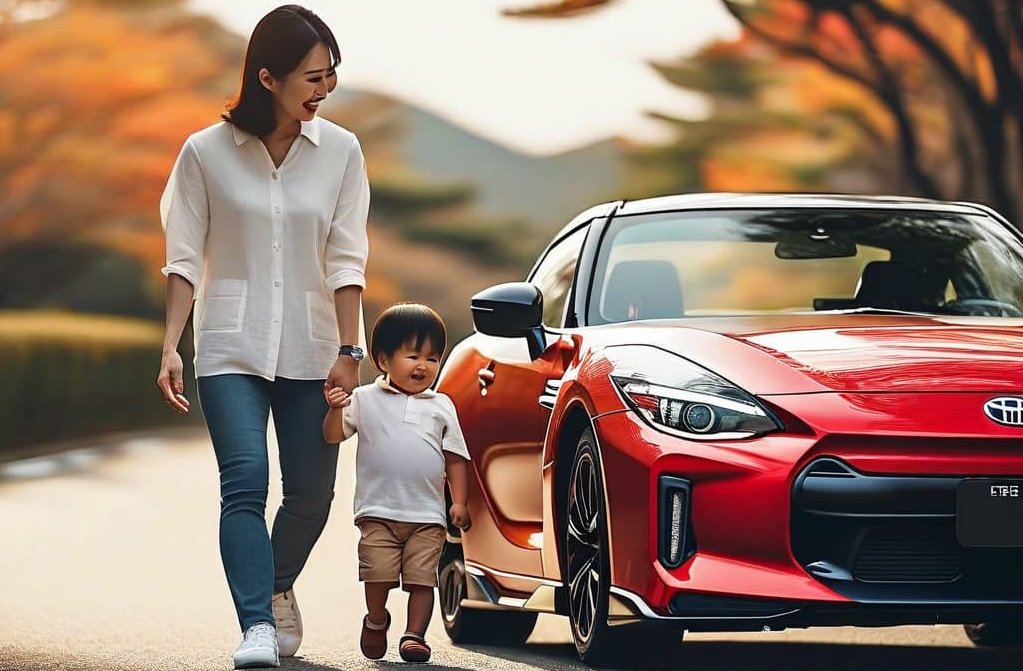
For Those Who Want to Keep Enjoying Driving Even After Starting a Family
"I used to drive a sports car when I was single, but now that I'm married with kids, I guess I have no choice but to switch to a minivan..."
If you're thinking that way, hold on a moment. It's true that the requirements for a car change significantly when you have a child. Being able to install a child seat, having space for a stroller, and being able to take care of your child in the back seat—these are absolutely essential conditions.
But does that mean we have to completely give up on the 'joy of running'?
In fact, as of 2025, there are many vehicles in the used car market that combine the practicality of a family car with the driving performance of a sports car. Moreover, they're available at a realistic budget of 2 million yen.
The used car market has reached approximately $1.47 trillion globally and continues to grow at over 6% annually. With such abundant options available today, why not break free from the fixed notion that "family car = minivan" and enjoy a more flexible approach to choosing your vehicle?
By reading this article, you will understand the following:
- What is a family sports car, its definition and reasons to choose one
- Detailed specifications of 5 recommended vehicle models available within a 2 million yen budget
- Checkpoints to avoid mistakes when selecting a used car
- Maintenance techniques to enjoy your purchase for the long term
You want to cherish both time with your family and your own hobbies. This article was written for you. Please stay with us until the end.
What is a Family Sports Car? Reasons to Choose One
Definition of Family Sports Car
When you hear the term "family sports car," what kind of vehicle comes to mind? Sports cars typically mean two-door coupes, while family cars bring to mind minivans and SUVs. These two concepts may seem contradictory.
However, a family sports car refers to a vehicle that achieves both of these elements at a high level. Specifically, it refers to vehicles that meet the following conditions:
In terms of practicality:
First and foremost, the vehicle must have four or more doors, or provide sufficient interior space. With a two-door coupe, you would need to fold down the front seats every time you load or unload a child from the child seat, which is impractical. With a four-door sedan or station wagon, you can access the rear seats directly through the back doors, which significantly improves everyday usability.
Next, there needs to be sufficient cargo space to fit a stroller. Even foldable strollers require a considerable amount of space. Additionally, considering that you'll also need to load shopping bags and diaper bags, you'll want at least 400 liters or more of trunk capacity.
And there must be a rear seat where a child seat can be safely installed. Of course, the presence of ISOFIX anchors is important, but the seat belt routing and seat cushion shape are also crucial factors.
In terms of sports performance:
Sufficient power performance is required for merging and overtaking on highways with confidence. Specifically, if the vehicle has enough power to accelerate from 0-100km/h in under 10 seconds, you won't feel any dissatisfaction in any daily driving scenario.
Additionally, handling that can be enjoyed on winding roads is important. The car responds the instant you turn the steering wheel, allowing you to trace the exact line you intend. That sense of unity is the true essence of a sports car.
Furthermore, agile responsiveness that answers the driver's intentions is essential. Acceleration begins the moment you press the accelerator, and deceleration occurs reliably when you press the brake. Whether these seemingly obvious things are realized at a high level is what distinguishes a sports car from other vehicles.
In terms of safety:
Since this is a vehicle that carries your family, safety features are one of the most important factors. Automatic braking (collision mitigation braking system) can now be considered essential equipment. This feature, which detects obstacles ahead and automatically decelerates, serves as the last line of defense in preventing accidents.
The number of airbags is also important. In addition to front airbags for the driver and passenger seats, having side airbags and curtain airbags significantly improves safety during side-impact collisions. Especially if you're considering having children in the back seat, the presence or absence of curtain airbags is a point you'll definitely want to check.
Electronic stability control (ESC/VSC/DSC) is also an essential safety feature for enjoying spirited driving. It ensures vehicle stability even during sudden steering maneuvers or on slippery road surfaces.
A car that balances all of these conditions is what can truly be called a family sports car.
Benefits of Choosing a Sports Car Over a Minivan
Many people may have the preconception that "family car = minivan." Indeed, minivans have spacious interiors, three rows of seats that can accommodate a large number of people, and sliding doors that make getting in and out easy. Their practicality as family cars is outstanding.
However, there are several significant advantages to choosing a car with sporty performance.
1. The joy of driving helps relieve stress
Daily commutes and weekend shopping trips. We actually have quite a lot of opportunities to drive. Whether you turn that time into "endurance time for transportation" or "enjoyable driving time" greatly changes the quality of your daily life.
If you have a car that's fun to drive, even your commute home after a tiring day at work can lift your spirits. The time spent behind the wheel itself becomes a time for stress relief. This is a significant advantage that minivans cannot provide.
2. Family drives become more enjoyable
"Papa's driving feels so good!"
Hearing words like that from your child would make you happy, wouldn't it? Smooth acceleration and stable cornering lead to a comfortable ride not only for the driver but also for passengers.
This point is particularly important for families with children who are prone to motion sickness. A car that firmly grips the road and drives stably is less likely to cause motion sickness than one that sways and wobbles.
3. Surprisingly good fuel efficiency
Many people may have the image that "sports cars have poor fuel efficiency." However, sports wagons equipped with the latest downsized turbo or diesel engines often achieve better fuel economy than large-displacement minivans.
For example, the Mazda Atenza diesel model boasts fuel efficiency of 14-18 km/L. This is comparable to, or even better than, minivans in the same class. Fuel cost savings make a significant difference in the long run.
4. From a resale value perspective
Popular sports models have high demand even in the used car market and tend to maintain their value well at the time of sale. In particular, sporty models from premium brands such as Lexus and BMW maintain stable popularity.
I understand the feeling of "I don't want to think about selling it someday." However, a car is an expensive purchase. Choosing one while considering its future resale value is the approach of a smart consumer.
5. Responding to Changing Needs as Children Grow
While your children are young, the spaciousness of a minivan may certainly seem appealing. However, children grow up in the blink of an eye. Once child seats are no longer needed and strollers are outgrown, you won't need that much space anymore.
In fact, as your children grow older, a car that makes them think "Dad's car is so cool!" might become an opportunity to deepen family bonds.
Balance Point of Practicality and Sports Performance
So, what level of practicality is required for a vehicle to qualify as a "family car"? Here, we will explain using specific figures.
Minimum Standards for Rear Seat Space
Use the following as a guide for rear seat space:
- Knee space: At least two fists' width (approximately 15cm or more)
- Head clearance: At least one fist's width (approximately 10cm or more)
- Width: Comfortable seating for two adults without feeling cramped
What's particularly important is whether an adult can sit next to the car seat when it's installed. If you have two children, also check whether you can install two car seats side by side.
Trunk Capacity Guide
Please use the following as a guide for trunk capacity:
- Minimum: 400L or more (fits stroller + shopping bags)
- Ideal: 500L or more (comfortably fits travel luggage)
- If possible: 600L or more (can load camping gear and more)
Additionally, the width of the trunk opening and the height of the floor are important factors. If the opening is narrow, it becomes difficult to load large items, and if the floor is high, loading and unloading heavy luggage becomes challenging.
Balance with Maintenance Costs
Owning a car involves not only the purchase cost but also maintenance expenses. If you're buying a car with a budget of 2 million yen, you should anticipate the following maintenance costs:
- Vehicle tax: Approximately 39,500 yen/year for 2.0L displacement, approximately 45,000 yen/year for 2.5L
- Auto insurance: Approximately 80,000-150,000 yen per year including vehicle coverage (depending on age and rating)
- Fuel costs: Approximately 10,000 yen per month for 1,000 km monthly driving with 15 km/L fuel efficiency (calculated at 150 yen/L gasoline)
- Vehicle inspection costs: Approximately 100,000-150,000 yen every 2 years
- Maintenance costs: Approximately 30,000-50,000 yen per year (oil changes, tire replacements, etc.)
Adding these together, the annual maintenance costs amount to approximately 300,000 to 500,000 yen. Whether you can comfortably afford this amount is also an important point in choosing a car.
Comfort for Everyday Use
When you think of sports cars, you might have an image of them having a stiff ride that's tiring. However, the vehicles we're introducing today have been designed with sufficient consideration for everyday comfort and usability.
Specifically, check the following points:
- Suspension firmness: Sporty yet tolerable when going over bumps
- Seat comfort: Comfortable enough to avoid fatigue during long drives
- Noise level: Quiet enough for conversation even on highways
- Air conditioning performance: Comfortable in both extreme heat and cold
There are indeed vehicles in the used car market with a budget of 2 million yen that meet these conditions while also allowing you to enjoy spirited driving. In the following chapters, we'll introduce specific recommended models.
Key Checkpoints When Choosing Within a $20,000 Budget
To avoid making mistakes when choosing a used car, be sure to check the following points. By keeping these firmly in mind, you can significantly reduce the risk of regretting your purchase with thoughts like "I didn't expect this to happen..."
Balance of Mileage and Model Year
When choosing a used car, aren't mileage and model year the most important factors? With a budget of 2 million yen, here are the guidelines:
Appropriate mileage: approximately 50,000 to 80,000 km
Generally, an annual mileage of around 10,000 km is considered standard usage. In other words, for a 5-year-old car, approximately 50,000 km is "normal," and for an 8-year-old car, around 80,000 km is considered typical mileage.
Vehicles with significantly higher mileage than this, known as "high-mileage vehicles," may have advanced wear on the engine and transmission. In particular, vehicles exceeding 100,000 km may require major component replacements such as timing belts and water pumps. There is a risk of incurring high repair costs immediately after purchase.
On the other hand, you should also be cautious of "low-mileage vehicles" that have extremely low mileage relative to their model year. Cars that have been left unused for long periods are prone to issues such as deterioration of rubber parts, battery drain, and brake seizure. Remember that "low mileage = good condition" is not always the case.
Model Year: Approximately 2015-2019
If you're looking for a well-maintained vehicle with a budget of 2 million yen, models from around 2015 to 2019 are your best bet. Vehicles from this era represent a period when advanced safety features such as automatic braking began to become widespread, and they possess safety performance that meets modern standards.
Additionally, for vehicles of this age, parts supply is still stable, so you're unlikely to have difficulty with maintenance.
How to Check Repair and Accident History
A vehicle with repair history means it has a record of repairs to the structural frame parts of the body, such as the frame or pillars. Minor accidents may not be a problem, but vehicles with frame distortion from major accidents may have affected driving performance and safety.
Points to Check:
- Is there an appraisal report from a third-party organization? If there is an appraisal report from a third-party organization such as JAAI (Japan Automobile Appraisal Institute), you can objectively verify the presence or absence of repair history. Request the dealership to provide the appraisal report.
- Are the gaps between the hood and doors uniform? Cars whose frames have been distorted in accidents may have uneven gaps between the hood, doors, and trunk. Walk around the car and check the gaps between each panel.
- Are there any paint color irregularities? Areas that have been repainted after an accident may have slightly different colors from the original paint. On a sunny day outdoors, check the painted surfaces from various angles.
- Does it drive straight during a test drive? Cars with distorted frames may drift to the left or right even when the steering wheel is held straight. During a test drive, try taking your hands off the steering wheel (in a safe situation) on a flat, straight road to check if the car drives straight.
Maintenance Cost Estimation Method
When purchasing a used car, it's important to consider not only the vehicle's base price but also the total cost including maintenance expenses. Below, we'll introduce the main maintenance cost items and estimation methods.
Automobile Tax
Automobile tax is determined by engine displacement. The main displacement categories and tax amounts are as follows:
- Over 1.0L to 1.5L or less: 34,500 yen/year
- Over 1.5L to 2.0L or less: 39,500 yen/year
- Over 2.0L to 2.5L or less: 45,000 yen/year
- Over 2.5L to 3.0L or less: 51,000 yen/year
Note that vehicles over 13 years from initial registration are subject to approximately 15% increased taxation.
Car Insurance Premium
Auto insurance premiums vary greatly depending on age, grade level, vehicle type, and coverage details. For someone in their 30s with a grade 6 rating, the estimated cost is approximately 100,000 to 150,000 yen per year including vehicle coverage.
While sports cars tend to have higher insurance premiums, the vehicles introduced here also have a "family car" aspect, so they are not as expensive as pure sports cars.
Fuel costs
Fuel costs are determined by driving distance, fuel efficiency, and gasoline prices. For example, driving 1,000km per month with fuel efficiency of 15km/L and gasoline price of 150 yen/L:
1,000km ÷ 15km/L × 150 yen/L = 10,000 yen/month
This amounts to approximately 120,000 yen per year. For diesel vehicles, fuel costs can be reduced even further since diesel fuel is cheaper than gasoline.
Vehicle Inspection Costs
Vehicle inspections must be conducted every two years. The cost breakdown is as follows:
- Statutory fees (compulsory automobile liability insurance, weight tax, stamp duty): approximately 50,000-60,000 yen
- Basic vehicle inspection fee: approximately 20,000-40,000 yen
- Maintenance costs: depends on condition (approximately 0-100,000 yen)
If the vehicle is in good condition, the vehicle inspection costs will be around 100,000 to 120,000 yen over 2 years.
Maintenance Costs
Don't forget about the costs associated with regular maintenance. The main items are as follows:
- Engine oil change: $45-90/time (2-3 times per year)
- Oil filter replacement: $18-27/time (once every 2 oil changes)
- Tire replacement: $360-720/set (once every 3-4 years)
- Brake pad replacement: $180-360/set (once every 3-5 years)
- Battery replacement: $90-270 (once every 3-5 years)
It's reassuring to budget approximately 30,000 to 50,000 yen for annual maintenance costs.
Safety Equipment Inspection Points
As of 2025, awareness of safe driving continues to grow. When choosing a used car, be sure to check for the following safety features.
Automatic Braking (Collision Damage Mitigation Braking)
This is a function that detects obstacles ahead and automatically decelerates and stops. It is equipped in many vehicle models from 2015 onwards. The name varies by manufacturer:
- Subaru: EyeSight
- Mazda: i-ACTIVSENSE
- Honda: Honda SENSING
- Toyota: Toyota Safety Sense
- VW: Front Assist
Airbag
Front airbags for the driver and passenger seats are standard equipment, but having the following airbags provides additional peace of mind:
- Side airbags: Protect the chest during side collisions
- Curtain airbags: Protect the head during side collisions
- Knee airbags: Protect the knees during frontal collisions
In particular, when considering having children ride in the back seats, the presence or absence of curtain airbags is an important point.
Electronic Stability Control (ESC/VSC/DSC)
This is a device that ensures vehicle stability during sudden steering maneuvers or on slippery road surfaces. It has been mandatory for vehicles manufactured since 2012, but may not be equipped in earlier models.
This system provides peace of mind when enjoying spirited driving. When you're about to exceed the limits, the car automatically intervenes.
[Recommended Model 1] Subaru Legacy Touring Wagon (4th Generation / 5th Generation)
Basic Specifications and Features
The Subaru Legacy Touring Wagon is Japan's premier sports wagon. The fifth generation (2009-2014) in particular achieves an exquisite balance between driving performance and practicality, earning high praise as a family sports car.
Main Specifications (5th Generation 2.5GT S Package):
- Model Year: 2009-2014
- Overall Length × Width × Height: 4,775mm × 1,780mm × 1,535mm
- Engine: 2.5L Horizontally-Opposed 4-Cylinder Turbo (285ps/350Nm)
- Drivetrain: AWD (Full-Time All-Wheel Drive)
- Transmission: 5-Speed AT / CVT
- Fuel Economy: 10-12km/L (actual fuel economy)
- Used Car Price Range: ¥800,000-¥2,000,000
The combination of a horizontally-opposed engine and Symmetrical AWD is a distinctive feature unique to Subaru. The excellent stability from its low center of gravity and reliable traction from all-wheel drive offer a unique appeal that can't be experienced with other manufacturers.
Practicality as a Family Car
The Legacy Touring Wagon offers excellent practicality as a family car.
Spacious Cargo Space
The trunk capacity is 520L under normal conditions, and when the rear seats are folded down, a cargo space of up to 1,600L becomes available. You can load not only baby strollers but also camping gear and bicycles. It can accommodate outdoor leisure activities for the whole family.
Rear Seat Space and Comfort
The rear seat legroom is adequately secured, and even adults can sit without feeling cramped. It is also possible to install two child seats side by side.
Safety of EyeSight-Equipped Models
Models from 2010 onwards are equipped with Subaru's renowned driver assistance system, "EyeSight." With high-precision recognition using stereo cameras, it achieves automatic braking and adaptive cruise control. As a car for carrying your family, this safety performance provides great peace of mind.
Peace of mind in bad weather with AWD
Subaru's Symmetrical AWD enables stable driving even on rainy days and snowy roads. For families who enjoy skiing and snowboarding as hobbies, this all-weather capability is a significant advantage.
The Appeal of Sports Performance
The true essence of the Legacy Touring Wagon lies in its sport performance.
Ample acceleration from the 2.5L turbo
The 2.5L turbocharged engine produces a maximum output of 285 horsepower and peak torque of 350 Nm. With 0-100 km/h acceleration in the 6-second range, it boasts performance rivaling that of sports cars. Merging and passing on highways is effortless.
Excellent handling due to low center of gravity
The horizontally opposed engine has a low center of gravity due to its structure. This suppresses body roll (vehicle lean) during cornering, resulting in stable handling. Driving on winding roads truly feels like the car responds "at will."
High-speed stability
The combination of AWD and a low center of gravity also contributes to stability on highways. Even at speeds exceeding 100 km/h, the vehicle remains firmly stable. A key feature is that it's less tiring even on long-distance drives.
Key Points to Consider When Choosing a Used Car
When purchasing a used Legacy Touring Wagon, pay attention to the following points.
CVT Durability Check
Some models of the fifth-generation Legacy are equipped with a CVT (Continuously Variable Transmission). CVTs have a risk of failure if proper maintenance is neglected. Check the CVT fluid replacement history and choose a vehicle that has been regularly maintained.
Maintenance History of Turbocharged Vehicles
Turbocharged engines require more careful oil management compared to naturally aspirated engines. Check the oil change history and choose a vehicle that has had oil changes at appropriate intervals (approximately every 5,000 km).
Undercarriage rust inspection
AWD vehicles are often used in snowy regions, and rust on the undercarriage caused by de-icing agents can become a problem. Lift up the vehicle to inspect the undercarriage and check the extent of rust.
Recommended Grade: 2.5GT S Package
With a budget of 2 million yen, the 2.5GT S Package is a great target. Equipped with a 285ps turbo engine and Bilstein dampers, you can fully enjoy sporty driving. If it's an EyeSight-equipped model, safety performance is also excellent.
[Recommended Vehicle 2] Mazda Atenza Wagon (2nd and 3rd Generation)
Basic Specifications and Features
The Mazda Atenza Wagon is a sports wagon that combines beautiful styling called "KODO Design" with the "Jinba Ittai" driving experience. The third generation (2012-2019) in particular fully adopted SKYACTIV Technology, achieving both driving performance and fuel efficiency at a high level.
Main Specifications (3rd Generation XD L Package):
- Model Year: 2012-2019
- Overall Length × Width × Height: 4,805mm × 1,840mm × 1,480mm
- Engine: 2.2L Diesel Turbo (175ps/420Nm)
- Drivetrain: FF / AWD
- Transmission: 6-speed AT
- Fuel Economy: 14-18km/L (actual fuel economy)
- Used Car Price Range: 1-2 million yen
The Atenza's greatest feature is its clean diesel engine, the "SKYACTIV-D." It combines the smooth, responsive feel of a gasoline engine with the powerful torque characteristic of diesel engines. It also offers excellent fuel efficiency and outstanding economic performance.
Practicality as a Family Car
The Atenza Wagon offers not only beautiful aesthetics but also ample practicality.
Refined design and texture
The graceful exterior created by "KODO: Soul of Motion Design" commands attention even in a parking lot. The interior also features an upscale finish with extensive use of soft padding and stitching, evoking the joy of ownership.
Ample Interior Space
The 4,805mm overall length body provides ample interior space. The rear seat knee room is sufficient, designed so that adults won't tire easily even during long periods of sitting.
506L trunk capacity
The trunk capacity is 506L, a standard figure for this class. You can load a stroller and shopping bags simultaneously with room to spare. Folding down the rear seats reveals an even more expansive cargo area.
i-ACTIVSENSE Safety Equipment
Equipped with Mazda's advanced safety technology "i-ACTIVSENSE." Protects your family with comprehensive safety features including automatic braking, lane departure warning, blind spot monitoring, and more.
Diesel Economy
Diesel engines have better fuel efficiency compared to gasoline engines and use diesel fuel, which is cheaper than gasoline. If you drive 10,000 km per year, you can expect to save approximately 20,000 to 30,000 yen annually in fuel costs compared to a gasoline vehicle.
The Appeal of Sports Performance
The Atenza Wagon offers a sporty driving experience that's hard to imagine from its beautiful styling alone.
The powerful torque of diesel
The 2.2L diesel turbo engine generates a maximum torque of 420Nm from a low 2,000rpm. Powerful acceleration begins the moment you press the accelerator, making highway overtaking effortless.
A driving feeling of unity between driver and vehicle
Mazda's pursuit of "Jinba Ittai" (oneness between horse and rider) driving dynamics is alive and well in the Atenza. Turn the steering wheel and the car responds faithfully, tracing exactly the line you intend. This sensation of unity between driver and vehicle is a unique appeal that can't be experienced with other manufacturers.
Excellent cornering with GVC
"G-Vectoring Control (GVC)" is a technology that fine-tunes the engine's driving torque according to steering operations to stabilize vehicle behavior. It improves cornering stability and enhances ride comfort for passengers.
High level of quietness
When it comes to diesel engines, you might have the image that they are "noisy." However, SKYACTIV-D has been thoroughly engineered for quietness, achieving a level of silence comparable to gasoline engines.
Important Points When Choosing a Used Car
When purchasing a used Atenza Wagon, pay attention to the following points.
Diesel DPF Clogging Risk
Diesel engines are equipped with a "DPF (Diesel Particulate Filter)" that collects particulate matter in exhaust gases. This DPF automatically regenerates by burning at high temperatures, but if the vehicle is frequently driven for short distances, regeneration may not complete, which can cause clogging.
Avoid vehicles with frequent short-distance trips
For the reasons mentioned above, it's safer to avoid vehicles that have been driven mainly for short distances. Look at the balance between mileage and year, and choose a vehicle that has been driven a reasonable distance.
Regular Maintenance Verification
For diesel engines, regular maintenance such as oil changes and filter replacements is crucial. Check the maintenance record book and choose a vehicle that has been properly maintained.
Recommended Grade: XD L Package
With a budget of 2 million yen, the XD L Package is a great target. It features a 2.2L diesel turbo engine and luxurious equipment such as leather seats and a BOSE sound system, allowing you to fully enjoy the pleasure of ownership.
[Recommended Model 3] Volkswagen Golf Variant (7th Generation)
Basic Specifications and Features
The Volkswagen Golf Variant is the wagon version of the globally beloved Golf. The 7th generation (2014-2021) adopted the MQB platform, significantly improving driving performance and practicality.
Main Specifications (7th Generation TSI Highline):
- Year: 2014-2021
- Dimensions (L×W×H): 4,575mm × 1,800mm × 1,485mm
- Engine: 1.4L inline-4 turbo (140ps/250Nm)
- Drivetrain: FF
- Transmission: 7-speed DSG
- Fuel Economy: 15-18 km/L (real-world)
- Used Car Price Range: ¥1.2-2 million
The appeal of the Golf Variant lies in its compact body size packed with class-leading quality and driving performance. With dimensions that match Japanese road conditions, its excellent maneuverability is also attractive.
Practicality as a Family Car
The Golf Variant offers ample practicality as a family car despite its compact body.
605L large-capacity trunk
The trunk capacity is 605L, which is top-level in this class. When the rear seats are folded down, a cargo space of up to 1,620L appears. You can easily load not only strollers and shopping bags, but also large suitcases.
High-quality interior finish
The practical and robust interior, characteristic of German cars, provides satisfaction every time you touch it. The extensive use of soft padding and stitching creates a sense of luxury that exceeds its price point. It's a design you won't tire of, even after long-term ownership.
Rear Seat Comfort
Despite its compact body, the rear seat accommodates passengers comfortably. Even adults won't feel cramped. Child seats can be installed without any issues.
Abundant Safety Equipment
Equipped with advanced safety features including Front Assist (automatic braking), Lane Keep Assist, and Adaptive Cruise Control. It provides peace of mind as a vehicle for carrying your family.
Compact and easy-to-handle size
With dimensions of 4,575mm in length and 1,800mm in width, this size matches well with Japanese road conditions. You can drive stress-free even in narrow parking lots and tight residential streets.
The Appeal of Athletic Performance
The Golf Variant combines not only practicality but also the joy of driving.
Efficient Power of Downsizing Turbo
The 1.4L turbo engine generates 140ps/250Nm despite its small displacement. It delivers powerful torque from low RPMs, providing satisfying power performance in all driving scenarios, from city streets to highways.
The rigid feel characteristic of German cars
High body rigidity is the hallmark of German cars. The moment you turn the steering wheel, the vehicle responds firmly, enabling precise line tracing. Even on highways, there's a solid sense of stability.
Comfort During High-Speed Cruising
Born in the land of the Autobahn, the car's comfort during high-speed cruising is exceptional. Even at speeds exceeding 100 km/h, the cabin remains quiet, allowing normal conversations. A key feature is that it's less fatiguing even on long-distance drives.
Quick shifting of DSG
The 7-speed DSG (Dual Clutch Transmission) combines the direct feel of a manual transmission with the convenience of an automatic. Quick and smooth gear changes deliver a sporty driving experience.
Important Points When Choosing a Used Car
When purchasing a used Golf Variant, pay attention to the following points.
DSG Maintenance Status
DSG requires regular oil changes. The manufacturer recommends every 60,000 km, but in Japan's congested traffic conditions, changes are recommended around 40,000 km. Check the maintenance records and verify the DSG oil change history.
Certified Pre-Owned Vehicle Options
Volkswagen's certified pre-owned vehicles (Das WeltAuto) only sell cars that have passed rigorous standards. With comprehensive warranty coverage, this program is recommended for those who have concerns about purchasing used imported vehicles.
Maintenance costs unique to imported vehicles
Imported vehicles tend to have higher parts costs and labor rates compared to domestic cars. Particularly when replacing consumable parts or performing repairs, costs can be approximately 1.5 to 2 times higher than domestic vehicles. Consider the total cost including maintenance expenses when making your purchase decision.
Recommended Grade: TSI Highline
With a budget of 2 million yen, the TSI Highline is a great target. It features a 1.4L turbo engine and comprehensive equipment, allowing you to fully enjoy the appeal of the Golf Variant.
[Recommended Model 4] BMW 3 Series Touring (F31)
Basic Specifications and Features
The BMW 3 Series Touring is a premium sports wagon that embodies "The Ultimate Driving Machine." The F31 generation (2012-2019) achieves an exceptional balance between sporty performance and practicality, earning high acclaim worldwide.
Main Specifications (F31 320i M Sport):
- Model Year: 2012-2019
- Overall Length × Width × Height: 4,625mm × 1,800mm × 1,440mm
- Engine: 2.0L Inline-4 Turbo (184ps/270Nm)
- Drivetrain: FR / AWD (xDrive)
- Transmission: 8-speed AT
- Fuel Economy: 13-16km/L (real-world)
- Used Car Price Range: ¥1.2-2 million
The appeal of BMW lies in the driving pleasure unique to FR (rear-wheel drive). When you press the accelerator, the rear wheels kick off the road surface, and when you turn the steering wheel, the front wheels respond faithfully. This natural driving feel is a unique charm that cannot be experienced with other manufacturers.
Practicality as a Family Car
The 3 Series Touring, contrary to its sporty image, is fully equipped with practicality as a family car.
495L trunk capacity
The trunk capacity is 495L, a standard figure for this class. When the rear seats are folded down, a maximum cargo space of 1,500L becomes available. It can accommodate not only strollers and shopping bags, but also golf bags.
Premium interior quality
The high-quality interior typical of BMW gives you the joy of ownership. The cabin, which uses premium materials such as genuine leather seats and wood panels, is designed to minimize fatigue even during long drives.
Comprehensive comfort features
Equipped with abundant comfort features including heated seats, automatic climate control, and power seats. Provides a comfortable space for the entire family to enjoy.
iDrive's Ease of Use
BMW's in-vehicle infotainment system "iDrive" allows for intuitive operation. Navigation, audio, vehicle settings, and more can be easily operated using the dial-type controller.
Rear Seat Comfort
The rear seat legroom is ample, and even adults can sit without feeling cramped. Child seat installation can also be performed without any issues.
The Appeal of Sports Performance
The true essence of the 3 Series Touring lies in its sports performance.
The driving pleasure unique to FR
FR (rear-wheel drive) is a drivetrain system that allows you to control the car's behavior through throttle input. The sensation of the rear wheels kicking off the road surface when you press the accelerator coming out of a corner delivers a unique driving pleasure that can't be experienced with FF.
Smooth shifting of the 8-speed AT
The ZF-manufactured 8-speed AT features smooth and quick shifts. In manual mode, you can also enjoy sporty driving using paddle shifters.
Accurate Steering
BMW's steering is precise and informative. Road conditions are transmitted directly, allowing you to experience a sensation of unity between driver and vehicle.
Embodying the Joy of Racing
BMW's slogan "The Ultimate Driving Machine" lives on in the 3 Series Touring. Whether on winding roads or highways, you can fully experience the joy of driving.
Key Points When Choosing a Used Car
When purchasing a used 3 Series Touring, pay attention to the following points.
Maintenance record verification required
For BMWs, regular maintenance is crucial. Check the service records to ensure that oil changes, brake pad replacements, and other maintenance have been properly performed, and choose a vehicle with a complete maintenance history.
Benefits of Certified Pre-Owned Vehicles
BMW certified pre-owned vehicles (BMW Premium Selection) are sold only after meeting strict standards. They come with a warranty of up to 2 years, providing peace of mind for any issues after purchase.
Understanding the High Cost of Maintenance
BMWs tend to have higher maintenance costs compared to domestic vehicles. In particular, when replacing consumable parts or making repairs, costs can be 2-3 times higher than domestic vehicles. Consider the total cost including maintenance expenses when deciding on a purchase.
Recommended Grade: 320i M Sport
With a budget of 2 million yen, the 320i M Sport is a good target. It's equipped with a 2.0L turbo engine, M Sport-specific suspension, and aerodynamic parts, allowing you to fully enjoy the appeal of BMW.
[Recommended Model 5] Honda Step WGN Spada (4th & 5th Generation)
Basic Specifications and Features
You might wonder why we're introducing a minivan in an article about "family sports cars." However, the Honda Step WGN Spada is a unique vehicle that offers sporty driving performance despite being a minivan.
Main Specifications (5th Generation Spada Hybrid):
- Model Year: 2015-2022
- Overall Length × Width × Height: 4,760mm × 1,695mm × 1,840mm
- Engine: 2.0L Hybrid (184ps) / 1.5L Turbo (150ps)
- Drive System: FF
- Transmission: CVT / Electric Continuously Variable
- Fuel Economy: 13-20 km/L (Hybrid)
- Used Car Price Range: 1.5-2 million yen
The Step WGN Spada is a minivan infused with Honda's sporting spirit. Through its low-floor design that achieves a low center of gravity and specially tuned suspension, it delivers handling that feels nothing like a typical minivan.
Practicality as a Family Car
The Step Wagon Spada boasts the overwhelming practicality that only a minivan can offer.
The Overwhelming Practicality of 3-Row Seating
The three-row seating accommodates up to 8 passengers, perfect for large families or outings with friends and their families. The second row offers a choice between captain seats and bench seats, allowing you to customize the configuration to match your lifestyle.
Convenience of Wakuwaku Gate
The "Waku Waku Gate," a distinctive feature of the 5th generation Step Wagon, is a unique mechanism where part of the tailgate opens horizontally. It allows for easy loading and unloading of cargo even in tight parking spaces, and also enables access to the third row of seats.
Low-floor design for easy boarding and alighting
With Honda's unique low-floor design, the floor height is approximately 30cm, making it easy for small children and elderly people to get in and out.
Abundant Storage Space
The abundant storage space unique to minivans is also appealing. With under-floor storage and seat back pockets, among other detailed storage options, the design makes it easy to keep the interior organized and tidy.
Honda SENSING Safety
Honda's advanced safety technology "Honda SENSING" comes standard on all vehicles. It protects your family with comprehensive safety features including automatic braking, lane keeping assist, and adaptive cruise control.
The Appeal of Sports Performance
The Step Wagon Spada offers sporty driving performance despite being a minivan.
Spirited Performance of the 1.5L Turbo
The 1.5L turbo engine produces 150ps/203Nm. The nimble acceleration characteristic of downsized turbo engines is surprisingly sporty for a minivan. Merging and passing on highways is effortless.
Handling that doesn't feel like a minivan
With its low floor design for a lower center of gravity and Spada-exclusive suspension tuning, it delivers handling that doesn't feel like a minivan. You'll be surprised at how enjoyable it is to drive even on winding roads.
Spada Exclusive Suspension
The Spada is equipped with a dedicated suspension system that differs from the standard model. It achieves a balance between sporty driving and comfortable ride quality, delivering a finish that satisfies both the driver and passengers.
Stability through low center of gravity
The low center of gravity from the low-floor design also contributes to stability during cornering. Roll (vehicle body tilt) is suppressed, improving ride comfort for passengers as well.
Key Points When Choosing a Used Car
When purchasing a used Step Wagon Spada, pay attention to the following points.
Turbo Engine Oil Management
For the 1.5L turbo engine, oil management is crucial. Check the oil change history and choose a vehicle that has had oil changes at appropriate intervals (approximately every 5,000 km).
Slide door operation check
Power sliding doors have a risk of malfunction with frequent use. During the test drive, check whether the sliding doors open and close smoothly. If there are unusual noises or catching, be cautious.
Check usage frequency for column 3
Vehicles that frequently used the third-row seats may have progressed seat deterioration. Check the condition of the seats and inspect for sagging or stains.
Recommended Grade: Spada Hybrid
With a budget of 2 million yen, the Spada Hybrid is a great choice. It combines powerful performance from the 2.0L hybrid system with excellent fuel efficiency of around 20 km/L. Honda SENSING is also standard equipment, ensuring comprehensive safety features.
Comparison Table of 5 Models and Recommendations by Type
Specifications and Price Comparison Table
Let's compare the 5 vehicle models introduced so far in a table.
Recommended for These Types of People
Each of the five models has its own unique characteristics, and which one you choose depends on your lifestyle and priorities. Use the following as a reference to find the right vehicle for you.
For those who prioritize driving performance → BMW 3 Series Touring
If you're looking for the driving pleasure unique to FR layout vehicles, the BMW 3 Series Touring is your best choice. The sporty driving experience that embodies "The Ultimate Driving Machine" offers a distinctive appeal you won't find in other vehicles. While maintenance costs are on the higher side, it's worth every penny.
For those who prioritize economy → Mazda Atenza Wagon
If you want to balance fuel efficiency with driving enjoyment, the Atenza Wagon diesel model is recommended. It combines excellent fuel economy of 14-18 km/L with a powerful torque of 420 Nm. Fuel costs are also lower with diesel, making it economical in the long run.
For those who want a car that's strong in bad weather → Subaru Legacy Touring Wagon
For those living in snowy regions or who enjoy skiing and snowboarding, the Legacy Touring Wagon is highly recommended. The stable driving performance provided by Symmetrical AWD ensures safety even on rainy days and snowy roads. With an EyeSight-equipped model, safety features are fully guaranteed.
For those seeking the quality feel of imported cars → Volkswagen Golf Variant
If you're looking for the solid, practical build characteristic of German cars combined with a compact body size, the Golf Variant is recommended. Its large 605L trunk capacity and easy maneuverability make it well-suited for Japanese road conditions.
For those who prioritize practicality above all → Honda Step WGN Spada
If you're looking for overwhelming practicality with 3-row seating, the Step WGN Spada is your best choice. It's a unique presence that lets you enjoy sporty driving despite being a minivan. Recommended for large families or those who frequently go out with friends and their families.
Specific Procedures and Checklist for Purchasing a Used Car
Pre-Purchase Preparation
Proper preparation is crucial for a successful used car purchase. Follow these steps:
1. Budget Clarification
Clarify your total budget, including not only the vehicle's base price but also additional fees. Here are the typical additional costs:
- Registration fee: $200-350
- Parking certificate fee: $70-140
- Delivery fee: $70-200
- Recycling fee: $70-140
- Automobile tax (prorated): Several hundred to several thousand dollars
- Compulsory insurance (prorated): Several hundred to several thousand dollars
Total miscellaneous expenses will be approximately 100,000 to 200,000 yen. For a vehicle with a base price of 2 million yen, you should budget around 2.1 to 2.2 million yen in total.
2. Prioritizing Desired Conditions
It can be difficult to find a car that meets all your requirements. Let's prioritize the following items:
- Vehicle model and grade
- Model year
- Mileage
- Body color
- Equipment (navigation system, sunroof, etc.)
- Accident/repair history
Clearly defining conditions that are "non-negotiable" and conditions that are "nice to have" will make the car selection process smoother.
3. Research multiple dealers
Don't limit yourself to just one dealership—compare multiple dealers. By using used car search sites like Cartree (https://cartree.jp/)などの中古車検索サイトを活用すれば、全国の在庫から希望の車を探すことができます。
4. Test Drive Reservation
Once you find a car you're interested in, be sure to schedule a test drive. You won't know the ride quality or how it handles until you actually drive it.
Checklist for Vehicle Inspection
When you go to see the car in person, please refer to the following checklist.
Exterior Inspection
- Check for scratches or dents
- Check for uneven paint color
- Check if panel gaps are uniform
- Check for cloudiness in headlights and taillights
- Check if tire treads have sufficient depth
- Check for scratches on wheels
Interior Inspection
- Check for stains or sagging on seats
- Check for odors (tobacco, pets, mold, etc.)
- Check for cracks or discoloration on dashboard
- Check if all switches operate normally
- Check if air conditioning works properly
- Check if audio/navigation system operates normally
Engine Room Check
- Check for oil leaks
- Check if coolant level is appropriate
- Check for belt deterioration
- Check if battery condition is good
Test Drive Checklist
- Is the engine starting smoothly
- Is idling stable
- Are there any abnormal noises during acceleration
- Are the brakes working properly
- Is there any discomfort with the steering
- Does it drive straight
- Is shifting smooth
Document Review
- Whether the vehicle inspection certificate contents are correct
- Whether maintenance records are available
- Whether repair history is clearly indicated
What to Do After Purchase
After purchasing a car, make sure to do the following.
1. Final inspection at vehicle delivery
At the time of vehicle delivery, perform a final confirmation to ensure there are no discrepancies between the contract details and the actual vehicle. If you have any concerns such as scratches or missing equipment, be sure to verify them on the spot.
2. Switching Insurance
When switching to a new car, you need to transfer your auto insurance. Make sure to complete the insurance procedures in time for the delivery date.
3. Developing a Maintenance Plan
Based on the condition of your purchased vehicle, create a maintenance plan for the future. By keeping track of when oil changes and tire replacements are due, you can avoid unexpected expenses.
4. Check consumable replacement timing
Depending on how the previous owner used the vehicle, consumable parts may need to be replaced. Check the replacement timing for the following items:
- Engine Oil
- Oil Filter
- Air Filter
- Brake Pads
- Brake Fluid
- Tires
- Battery
- Wiper Blades
Tips for Enjoying Your Family Sports Car for Years to Come
The Importance of Regular Maintenance
To enjoy your hard-earned family sports car for a long time, regular maintenance is essential.
Oil Change Cycle
Engine oil is a critical consumable that could be considered the lifeblood of your car. The guidelines for replacement are as follows:
- Regular use: Every 5,000-7,000km or every 6 months
- Frequent sport driving: Every 3,000-5,000km
- Turbocharged vehicles: Every 5,000km recommended
Neglecting oil changes can lead to increased wear on engine internals, and in the worst case, can result in engine failure. Make sure to change your oil regularly.
Tire Management
Tires are the only point of contact between your vehicle and the road surface. They are a critical component directly linked to safety and driving performance.
- Tire Pressure: Check monthly (maintain specified pressure)
- Tread Depth: Replace when below 1.6mm (check wear indicators)
- Rotation: Swap front and rear tires every 5,000-10,000km
- Replacement Timing: Every 3-4 years or approximately 40,000-50,000km
Checking Brake Pads
Brake pads wear down with each use. When the remaining thickness is 3mm or less, it's time for replacement. If you hear unusual noises (squealing sounds), have them inspected immediately.
How to Find a Reliable Auto Repair Shop
Choose the maintenance shop to entrust with regular maintenance carefully. Please refer to the following points:
- Does the shop have nationally certified mechanics
- Are explanations courteous and easy to understand
- Do they provide estimates in advance
- Do they have good reviews and reputation
- For imported cars, do they have experience servicing that vehicle model
Driving Tips for Family Fun
The real appeal of a family sports car is enjoying drives with your family. Use the following tips as a reference to have a fun car life.
Drive courses that children can enjoy
- Take breaks at service areas or parking areas
- Enjoy not only the destination but also the scenery along the way
- Prepare music and games to keep children from getting bored
- For children prone to motion sickness, take frequent breaks and ventilate the car
Balancing Safe Driving and Sport Driving
When driving with family, safe driving is the top priority. Enjoy spirited driving when you're alone or in a safe environment such as a racetrack.
Share the habit of taking care of your car as a family
The attitude of taking care of your car also has a positive influence on your children. Conversations like "Dad's car is so cool" and "Let's take good care of it" may become opportunities to deepen family bonds.
Turn Car Washing into a Family Event
Why not turn your weekend car wash into a family event? For children, it's fun like playing with water, and it also fosters a caring attitude toward the car.
Driving with Resale Value in Mind
By keeping the following points in mind when driving, you can maintain the resale value when considering a future sale.
Mileage Management
The standard mileage is approximately 10,000 km per year. Significantly exceeding this tends to lower the appraisal value when selling. If possible, be mindful of and manage your annual mileage.
Tips for Keeping Your Interior Clean
- Use seat covers and floor mats
- Minimize eating and drinking (especially watch for children's spills)
- Vacuum regularly
- Care for leather seats with dedicated cleaner
Prevent accidents
It goes without saying, but avoiding accidents is the most important thing. If your vehicle has a repair history, the appraisal amount will decrease significantly. Practice safe driving and minimize the risk of accidents.
The Importance of Keeping Records
The maintenance record book is like a car's resume. Having records of regular maintenance can positively impact the appraisal value when selling. Make sure to have the records kept whenever you receive maintenance service.
Summary | Choosing Not to Give Up on Driving Even with a Family
So far, we've introduced 5 family sports car models that can be purchased within a budget of 2 million yen. Finally, let's review the appeal of each one once more.
Subaru Legacy Touring Wagon Unique driving performance with horizontally-opposed engine and Symmetrical AWD. Features all-weather capability for safe driving even on snowy roads and high safety performance with EyeSight.
Mazda Atenza Wagon Beautiful styling with "Kodo Design" and the powerful torque of a diesel engine. With excellent fuel efficiency, it's recommended for those who want to balance economic efficiency with driving pleasure.
Volkswagen Golf Variant German-engineered with solid, practical construction and a compact body size. It features an attractive combination of a large 605L trunk capacity and excellent maneuverability.
BMW 3 Series Touring An FR sports wagon that embodies "The Ultimate Driving Machine." For those who prioritize driving pleasure above all else, there is no better choice.
Honda Step WGN Spada A unique presence that offers sporty driving while being a minivan. It combines the overwhelming practicality of three-row seating with the high safety performance of Honda SENSING.
"Once you have a family, you have to give up on sports cars."
Now that you've read this article, hasn't that way of thinking changed?
With a budget of 2 million yen, you can find cars in the used car market that achieve a high level of both practicality and sports performance. Just because it's a family car doesn't mean you have to give up the joy of driving.
What's important is finding a vehicle that fits your lifestyle. Be sure to carefully check the mileage, repair history, and safety features, and always take a test drive before making your decision.
Don't give up on either time with your family or the joy of driving. Please make this kind of car life a reality.
Cartree (https://cartree.jp/) features a wide selection of used vehicles, including the models introduced in this article. Please feel free to search for your ideal car.
Cartree lets you browse used cars for free and list your own.