
The Ultimate Used 4WD/SUV Complete Guide for Outdoor Enthusiasts | 8 Selections for Car Camping Specs
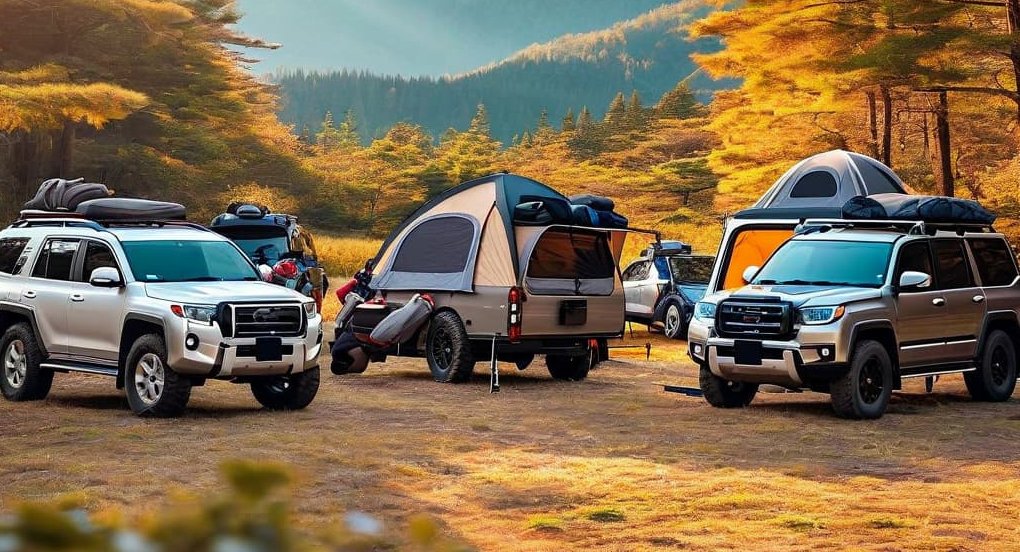
Introduction: Why Used SUVs Are Hot Right Now
"I want to go camping with my family on the weekend" "I want to travel around Japan staying overnight in my car"—Do any of you have dreams like these?
As we enter 2026, the outdoor boom continues to accelerate. The lifestyle of "avoiding crowds and enjoying nature," which spread during the COVID-19 pandemic, has become firmly established in our lives. Car camping in particular has gained widespread popularity among everyone from families to solo campers, as it allows for free travel while keeping accommodation costs down.
In this context, what's attracting attention is the "used 4WD and SUV" market. The global used car market is projected to grow from approximately $43.3 billion in 2024 to about $83 billion by 2030, showing a remarkable average annual growth rate of 11.34%. Even within Japan, large-scale used car exhibitions are being held across the country, demonstrating that the entire used car market is thriving.
While new SUVs often cost between 3 million and over 5 million yen, you can get a genuine 4WD vehicle for around 1 million yen with a used car. A major attraction is that you can use the money saved to purchase car camping gear or enjoy customizing your vehicle.
In this article, we will introduce 8 carefully selected used 4WD and SUV models that are ideal for car camping and outdoor activities. We will provide comprehensive information needed for those considering a purchase, from basic knowledge on how to choose, to customization methods and practical usage tips. Please stay with us until the end.
Essential Knowledge Before Choosing a Used 4WD/SUV
To avoid mistakes when choosing a car, it's important to first understand the basic knowledge. Here, we'll explain in detail everything from the differences between 4WD and SUV, to checkpoint items when purchasing a used car, and budget-based purchasing strategies.
Differences Between 4WD and SUV and Key Points for Selection
First, let's clarify the difference between "4WD" and "SUV," which are often confused with each other.
**4WD (four-wheel drive)** refers to a drivetrain system that transmits engine power to all four tires. On the other hand, **SUV (Sport Utility Vehicle)** is a term that refers to a vehicle category and is not necessarily 4WD. In fact, many SUV models come with 2WD (two-wheel drive) options.
If you're serious about enjoying outdoor activities and car camping, I definitely recommend getting a 4WD model. You can drive with confidence on unpaved roads and muddy campsites, and the stability on snowy roads is significantly better.
There are two main types of 4WD systems.
Full-time 4WD is a system that constantly distributes driving force to all four wheels. It enables stable driving regardless of road conditions, but fuel efficiency tends to be somewhat inferior. It is adopted in vehicles such as the Land Cruiser and Forester.
Part-time 4WD is a system that normally operates in 2WD and switches to 4WD as needed. While it offers good fuel efficiency, it requires manual switching operation. This system is used in vehicles such as the Jimny and Hilux Surf.
The size of the SUV is also an important selection point. Please choose the optimal size according to your family structure and usage.
- Compact SUV (under 14.4 ft overall length): Easy to maneuver and convenient for city driving. Ideal for solo travelers or couples
- Mid-size SUV (14.4-15.7 ft overall length): Well-balanced interior space and maneuverability. Suitable for families
- Large SUV (over 15.7 ft overall length): Spacious interior perfect for car camping. Ideal for large families or groups
Checkpoint When Purchasing a Used Car
To avoid mistakes when choosing a used car, we'll share the essential points you must check. Knowing these will make a significant difference in your satisfaction after purchase.
Mileage Guidelines
Generally, approximately 10,000 km per year is considered standard mileage. For a 5-year-old vehicle, 50,000 km is the guideline, and for a 10-year-old vehicle, 100,000 km is the benchmark. If the mileage significantly exceeds these standards, there is a possibility that the engine and transmission have experienced considerable wear.
However, you should also be cautious of vehicles with extremely low mileage. Cars that have been sitting unused for long periods may have deteriorated rubber components and depleted batteries. Just because a car has low mileage doesn't necessarily mean it's in good condition.
Checking Repair History
Repair history refers to the record of repairs made to a vehicle's structural components (frame). Minor body work is not included, but vehicles that have sustained damage to their frame from accidents or other incidents may experience effects on driving performance and safety.
Used car dealerships are required to display whether a vehicle has repair history, so be sure to check. If you have any uncertainties, you can also request a vehicle inspection by a third-party organization. While there is a small cost involved, since this is a large purchase, it's important to consider that you're buying peace of mind.
4WD System Operation Verification
When purchasing a 4WD vehicle, be sure to verify that the 4WD system operates properly. It's important to actually test the operation, such as checking whether a part-time 4WD can switch smoothly, or whether the center differential lock functions correctly in a full-time 4WD.
During the test drive, it would be ideal if you could confirm the 4WD performance on unpaved roads or hills if possible.
Rust and Undercarriage Inspection
Since 4WD vehicles often travel on rough roads, thoroughly check the undercarriage for rust and damage. Vehicles that have been used in snowy regions may have progressed rust due to the effects of snow-melting agents.
It's reassuring to choose a dealership where you can lift up the vehicle to check the undercarriage. At CarTree, we provide detailed photos and information so you can thoroughly check the vehicle's condition, so please feel free to use this as a reference.
Purchase Strategy by Budget
For used 4WD and SUVs, there are various options available depending on your budget. Choose the optimal strategy that fits your budget.
Under 500,000 yen: Entry Model
In this price range, you'll primarily find vehicles that are over 10 years old. Look for models with solid basic performance, such as older Hilux Surf and CR-V models. However, since maintenance costs can add up, it's important to choose a vehicle with well-documented service records.
To avoid the situation of "penny wise, pound foolish," we recommend considering not only the purchase price but also the maintenance costs after purchase.
500,000 to 1,000,000 yen: Balance-focused
This is the price range with the best cost performance. Popular models that are 5 to 8 years old fall within this range. You can find well-equipped vehicles such as early models of the CR-V and CX-5.
This price range offers plenty of options, so it's worth taking the time to compare and consider them carefully.
1,000,000 to 2,000,000 yen: Recent model year, low mileage
You can choose relatively new vehicles that are 3-5 years old or high-quality used cars with low mileage. You can also target models close to the current generation of the Forester and X-Trail, which are equipped with the latest safety features.
Considering long-term use, this price range might be the most recommended.
Over 2 million yen: Premium Class
Options include high-grade year models of authentic 4WD vehicles such as the Land Cruiser Prado and Delica D:5. With high resale value, these vehicles are also advantageous when selling in the future.
This price range is perfect for those who want to "use quality items for a long time."
Don't forget to calculate maintenance costs as well. Vehicles with engine displacements over 2,000cc have higher automobile taxes, and cars with poor fuel efficiency will have significantly different annual fuel costs. It's important to make decisions based on total cost, not just the purchase price.
[2026 Edition] 8 Best Used 4WD/SUV Vehicles for Car Camping
Now, let's dive into the main topic: vehicle recommendations. We've carefully selected 8 models that cater to various needs, from family-oriented to solo and hobby-focused options. We'll provide detailed explanations of each vehicle's characteristics, so you can find the perfect one that matches your lifestyle.
① Toyota Land Cruiser Prado (150 Series)
Recommended Year: 2013-2017 Price Range: ¥1.8-2.8 million Fuel Economy: 9-11 km/L
The Prado, the younger brother of the Land Cruiser, which is called the "King of SUVs." Since it's not as large as the main Land Cruiser, it's also suitable for Japanese road conditions.
The greatest appeal is its overwhelming off-road capability. Equipped with a driving mode switching system called Multi-Terrain Select, it can handle all road surface conditions including rocky terrain, sandy areas, and muddy ground. It's no exaggeration to say "there's nowhere it can't go."
The interior space is also spacious, allowing a family of five to ride comfortably with room to spare. With a three-row seating configuration, it can accommodate up to seven passengers. When the rear seats are folded down, there's enough space for two adults to stretch out and sleep. It can be said that this is an ideal vehicle for camping in your car.
The high resale value is also a noteworthy point. Toyota's 4WD vehicles are popular overseas as well, and even 10-year-old models are traded at high prices. Many people say, "I bought it intending to drive it until it died, but it sold for much more than I expected."
Car Camping Suitability: ★★★★★ Family-Friendliness: ★★★★★ Recommended Customizations: Roof tent, side awning, rear ladder
② Subaru Forester (SJ Series)
Recommended Year: 2014-2018 Price Range: ¥1.2M-2M Fuel Economy: 13-16 km/L
The Forester, Subaru's flagship SUV, is appealing for its "just right size." At approximately 4.6 meters in length, it strikes a perfect balance between maneuverability in urban areas and practicality for outdoor activities.
Subaru's unique horizontally-opposed engine delivers stable driving performance thanks to its low center of gravity. Whether changing lanes on the highway or cornering on mountain roads, there's minimal sway and a reassuring sense of control. For outdoor enthusiasts who frequently take long-distance drives, this stability is truly appreciated.
This model year Forester is equipped with Subaru's advanced safety technology "EyeSight." It monitors the road ahead with stereo cameras and automatically applies the brakes when it detects a collision risk. It's a reassuring companion for those who frequently drive with family members.
For sports-oriented drivers, we recommend the "XT" grade equipped with a turbo engine. With 280 horsepower, you can drive through mountain roads without stress.
Car Camping Suitability: ★★★★☆ Family-Friendliness: ★★★★☆ Recommended Customizations: Roof box, rear gate tarp, LED room lamp
③ Mitsubishi Delica D:5
Recommended Year: 2012-2018 Price Range: 1-2.2 million yen Fuel Efficiency: 10-13km/L
The Delica D:5 is a truly unique vehicle that combines "genuine 4WD capability in a minivan." It achieves a high level of balance between family car practicality and off-road capability, making it the perfect vehicle for outdoor-loving families.
The spacious interior that can accommodate up to 8 passengers provides an overwhelming advantage for car camping. By flattening the second and third row seats, you can create a space where 2 adults and 2 children can sleep comfortably. The high ceiling makes changing clothes inside the vehicle easy. This is a significant appeal that other vehicle models don't offer.
Mitsubishi's 4WD technology is the real deal, honed through the Paris-Dakar Rally. The electronically controlled 4WD system "AWC (All Wheel Control)" distributes optimal driving force according to road conditions. Even on snowy roads or muddy terrain, there's virtually no worry about getting stuck.
The abundance of custom parts is also one of the Delica D:5's attractions. With lift kits, off-road tires, roof carriers, and more, there's the joy of customizing it to your personal preferences.
Car Camping Suitability: ★★★★★ Family Friendliness: ★★★★★ Recommended Customization: Lift-up, All-Terrain Tires, Roof Carrier
④Nissan X-Trail (T32)
Recommended Model Years: 2015-2020 Price Range: ¥1.3-2.2 million Fuel Efficiency: 13-16 km/L (Hybrid: 15-18 km/L)
The X-Trail, developed with the concept of "Tough Gear," is characterized by a design that strongly emphasizes outdoor use.
The biggest appeal is that waterproof seats and a waterproof luggage board come as standard equipment. You can load wet wetsuits and muddy camping gear without worry. For those who enjoy activities involving water or mud, such as surfing, fishing, or mountain climbing, there's no better equipment than this.
A three-row seat configuration is also available, allowing for seven-passenger seating. You can fold down the third row to use it as a spacious luggage area during normal use, and expand the third row only when needed.
Models from 2016 onwards are equipped with Nissan's driving assistance technology "ProPILOT." It reduces fatigue during long-distance drives with features such as automatic following on highways and lane-keeping assistance.
Car Camping Suitability: ★★★★☆ Family-Friendliness: ★★★★☆ Recommended Customizations: Car camping mattress, rear gate tarp, roof rack
⑤Suzuki Jimny Sierra (JB74)
Recommended Year: 2018~ Price Range: 1.8-2.5 million yen Fuel Efficiency: 13-15 km/L
The Jimny Sierra, which underwent its first full model change in 20 years in 2018, has been a highly popular vehicle with constant delivery wait times since its release. It maintains high prices in the used car market, sometimes even exceeding the new car price.
Despite its compact body (overall length of 3,550mm), it features a genuine ladder frame structure and part-time 4WD system. Its off-road capability rivals even large SUVs. Whether it's forest trails or riverbeds, it can boldly venture into places where other vehicles would hesitate to go.
You might think, "Isn't it too small for car camping?" but there's plenty of space for solo travelers or couples. If you recline and flatten the passenger seat, someone around 5'7" tall can sleep with their legs stretched out.
It's also highly popular as a custom base, with countless custom parts available for sale including lift kits, over fenders, roof carriers, and more. The joy of building your own unique vehicle is truly exceptional.
Car Camping Suitability: ★★★☆☆ (For Solo/Couples) Hobby Appeal: ★★★★★ Recommended Customizations: Lift Kit, Mud Tires, Roof Tent
⑥Honda CR-V (RM Series)
Recommended Year: 2012-2016 Price Range: 800,000-1,500,000 yen Fuel Efficiency: 11-14 km/L
If you prioritize cost performance, the CR-V is a top candidate. It's not uncommon to find vehicles in good condition for under 1 million yen.
Through Honda's signature low center of gravity design, it achieves remarkably stable handling that's uncharacteristic of an SUV. Lane changes on the highway and cornering on winding roads can be handled with sedan-like precision.
The luggage space boasts class-leading capacity. With the rear seats folded down, it provides up to 1,648 liters of storage. You can easily load large outdoor gear such as bicycles and kayaks.
Fuel efficiency is also excellent, with real-world fuel economy ranging from approximately 11 to 14 km/L. This vehicle is perfect for those who want to enjoy outdoor life while keeping maintenance costs low.
Car Camping Suitability: ★★★★☆ Family-Friendliness: ★★★★☆ Cost Performance: ★★★★★ Recommended Customization: Bed kit, sunshade, portable power station
⑦Mazda CX-5 (KE Series)
Recommended Model Year: 2012-2017 Price Range: $9,000-$18,000 Fuel Efficiency: 14-18 km/L (Diesel)
The CX-5, delivered by Mazda in pursuit of "the joy of driving," is a vehicle that offers sporty driving pleasure despite being an SUV.
The greatest feature is the installation of the clean diesel engine "SKYACTIV-D". The 2.2L diesel turbo delivers powerful performance of 175 horsepower and 420 Nm while achieving excellent fuel economy of around 18 km/L in real-world driving. Since diesel fuel is cheaper than gasoline, the fuel cost savings are tremendous.
The quality of the interior is also outstanding in this class. The dashboard with extensive use of soft-pad materials, genuine leather-wrapped steering wheel, and premium seat materials all provide a sense of pride in ownership.
The styling, called "KODO (Soul of Motion) Design," doesn't feel dated even more than 10 years after its release. It's a vehicle that looks great whether at a campground or in the city.
Car Camping Suitability: ★★★☆☆ Sportiness: ★★★★☆ Fuel Efficiency: ★★★★★ Recommended Customizations: Aero parts, Roof box, LED customization
⑧Toyota Hilux Surf (215 Series)
Recommended Year: 2002-2009 Price Range: $5,000-$12,000 Fuel Economy: 7-10 km/L
As a "representative of classic SUVs," the Hilux Surf continues to enjoy strong popularity to this day. Even more than 15 years after production ended, it remains beloved by many fans.
The greatest appeal is its robust ladder frame structure. While many modern SUVs adopt a monocoque structure (where the body and frame are integrated), the Hilux Surf uses a traditional ladder frame (a structure where the body sits on a ladder-shaped frame). This ensures durability on rough roads and stability when carrying heavy loads.
Many vehicles are available for under 500,000 yen, making it ideal for those who want "an affordable 4WD at any cost." You can also use the money saved to enjoy customizing your vehicle.
Custom parts are abundantly available, both new and used. There's the enjoyment of customizing to your own preference with lift kits, over-fenders, grille guards, roof racks, and more.
However, due to its age, a thorough inspection before purchase is essential. Pay particular attention to checking the undercarriage for rust and verifying that the 4WD system is functioning properly.
Car Camping Suitability: ★★★★☆ Entertainment Value: ★★★★★ Cost Performance: ★★★★☆ Recommended Customization: Lift-up, Grille Guard, Roof Rack
How to Customize for Car Camping
Once you've found your favorite vehicle, the next step is customizing it for car camping. We'll introduce the items you'll want to have on hand and key customization points to ensure a comfortable car camping lifestyle.
8 Essential Items
To enjoy car camping comfortably, let me introduce the essential items you should have first. It's also a good idea to gradually collect them according to your budget.
1. Mattress/Bed Kit (Budget: $1,300-$6,500)
This is the most important item that determines the comfort of sleeping in your car. By installing a bed kit designed specifically for your vehicle model, you can secure a flat sleeping space without worrying about seat bumps and irregularities.
For those looking to keep costs down, an inflatable mat about 10cm thick is recommended. Simply inflate it and it will absorb the unevenness of the ground. You'll notice a huge difference in body aches the next morning.
2. Blackout Curtains/Shades (Budget: $50-$300)
An essential item for ensuring privacy and blocking out external light. Vehicle-specific shades fit perfectly to the windows, providing seamless light blocking without any gaps.
In summer, choosing a shade with insulation effects can suppress the rise in vehicle interior temperature. In winter, it is also effective for preventing condensation.
3. Portable Power Station (Budget: 30,000 to 150,000 yen)
It is essential for using various electrical appliances, from charging smartphones to electric blankets and mini refrigerators.
If you choose one with a capacity of 500Wh or more, it will be sufficient for 1-2 nights of car camping. When combined with a solar panel, you won't have to worry about power shortages even on long trips. Recently, performance has improved and prices have come down, making them easier to adopt.
4. LED Lantern (Budget: $20-$70)
It serves as interior vehicle lighting and is also useful during relaxation time outside the vehicle. Choosing one with a dimming function is convenient as you can adjust the brightness according to the scene.
If it's rechargeable, you can charge it from a portable power station, so you don't have to worry about running out of batteries.
5. Storage Boxes & Racks (Budget: $100-$500)
To effectively utilize the limited interior space of your vehicle, building a storage system is important. Make use of stackable container boxes and net racks that can be mounted on the ceiling.
By following the basic principle of "frequently used items in front, less frequently used items in back," you can make taking things in and out smoother.
6. Ventilation Fan/Circulator (Budget: 5,000-20,000 yen)
Circulates the air inside the vehicle to prevent condensation and stuffiness. Window-mounted ventilation fans allow you to ventilate while keeping insects out.
If you choose a USB-powered type, you can conveniently power it directly from a portable power station.
7. Cooking utensils (budget 5,000 to 20,000 yen)
With a portable cassette stove and cookware set, simple cooking is possible. However, using open flames inside the vehicle poses a risk of carbon monoxide poisoning, so always ensure proper ventilation or cook outside the vehicle.
Recently, electric kettles and hot plates that can be used with portable power stations have become popular. Since they don't use fire, you can cook safely.
8. Crime Prevention Items (Budget: 3,000-10,000 yen)
Security measures are essential when sleeping in your car in unpopulated areas. In addition to checking door locks, utilize security film to make windows harder to break and sensor lights that detect unusual activity.
Key Points for DIY Customization
For those who find "ready-made products unsatisfying" or want "their own original specifications," DIY customization is recommended. The joy of creating something yourself is exceptional, and it helps build a special attachment to it.
DIY Bed Kit
You can create your own original bed kit using lumber and cushioning materials available at home improvement stores. Carefully measure the dimensions for your specific vehicle model and create a design plan before starting construction.
The key point is to make it foldable. By using it as cargo space normally and only deploying the bed during car camping, the usability is dramatically improved.
Effective Use of Storage Space
By installing a net on the ceiling, you can create storage space for lightweight items. Additionally, pull-out storage that utilizes the space under the seats is also popular.
Many ideas for small DIY projects using 100-yen shop items are also shared on social media. Try using them as a reference.
Methods for Securing Power Supply
If you're aiming for a full-fledged car camping setup, consider installing a sub-battery system. This system charges the sub-battery while driving and supplies power from the sub-battery when parked.
However, modifying electrical systems requires specialized knowledge. If you're not confident, we recommend consulting a professional.
Custom by Professional
If you're thinking "I'm not good at DIY" or "I want a guaranteed quality finish," we recommend consulting a specialty shop.
Shops specializing in car camping customization have staff who are well-versed in the characteristics of each vehicle model and can propose the optimal customization plan for you. The appeal is that you can request everything in one stop, from bed kit fabrication to electrical system modifications and insulation installation.
The cost range is approximately $1,300-$2,000 for basic bed kit installation, and $3,300-$6,700 for full-scale camper conversion modifications. While not inexpensive, you get the assurance of professional workmanship with reliable results and after-sales support.
Practical Guide to Enjoying Outdoor Activities and Car Camping
Once you have your vehicle and equipment ready, it's time to put it into practice. We'll provide you with a practical guide so that even beginners can enjoy car camping with confidence.
Choosing Car Camping Spots for Beginners
RV Park/Auto Campground
For car camping beginners, RV parks and auto campgrounds are recommended. They are equipped with facilities such as electricity, water, and restrooms, allowing you to stay with peace of mind.
There are over 300 RV Parks nationwide, and they can be searched on the Japan RV Association website. Fees are approximately 1,000 to 3,000 yen per night, which is reasonable compared to lodging facilities.
Sleeping in your car at roadside stations
Overnight sleeping in your car at roadside stations (michi-no-eki) is not prohibited by law. However, it should be limited to "brief rest" only, and long-term stays or camping activities should be avoided.
With the revised Road Traffic Act enforced in April 2026, traffic rules have become stricter, including speed limits reduced to 30 km/h in some residential road areas. Please be mindful of following proper etiquette around roadside stations as well.
Specifically, please pay attention to the following points.
- Avoid extended parking with the engine running
- Do not set up tables or chairs outside the vehicle
- Always take your trash with you
- Do not make loud noises
By following proper etiquette, we can help ensure that car camping culture continues for years to come.
Free Campground
There are many free campsites available throughout the country. While facilities are minimal, you can experience the true pleasure of spending time in nature.
However, most free campsites do not require reservations and can become crowded during peak seasons. Additionally, some locations may not have cell phone reception, so gathering information in advance is important.
Seasonal Precautions
Spring/Fall: Temperature fluctuation control, condensation prevention
Spring and fall are seasons with large temperature differences between day and night. Even if it's warm during the day, it can get cold at night. Choose a sleeping bag that can handle temperatures 5-10°C (9-18°F) lower than the expected temperature.
Additionally, condensation tends to occur more frequently during this period. Make it a habit to ventilate regularly, and it's convenient to have a squeegee for removing condensation on hand.
Summer: Heat protection, insect prevention, heatstroke prevention
Sleeping in your car during summer is a battle against the heat. It's necessary to take measures to prevent the temperature inside the vehicle from rising, such as choosing high-altitude locations, parking in the shade, and using sunshades.
When opening windows for ventilation, install screens to prevent insects from entering. Mosquito coils and insect repellent sprays are also essential items.
To prevent heat stroke, make sure to stay hydrated by drinking water frequently. With a portable refrigerator, you can always have cold beverages on hand.
Winter: Cold weather protection, carbon monoxide poisoning prevention
For winter car camping, cold protection measures are the top priority. Block cold air from windows with highly insulated shades, and stay warm using electric blankets or hot water bottles.
Leaving the engine running for heat poses a risk of carbon monoxide poisoning. Particularly when snow accumulates and blocks the muffler, exhaust gases can flow back into the vehicle. Always turn off the engine and use electric heating devices. This is a critical point that concerns your life.
Outdoor Activities to Enjoy with the Family
Tips for Camping with Children
When camping in your car with children, advance preparation is the key to success. Bring their favorite toys and picture books to make the time spent in the car enjoyable as well.
For bedtime, it's important to maintain the same rhythm as usual. If your child is too excited to fall asleep, create a relaxing environment by playing quiet music or reading a picture book aloud.
Important Points for Bringing Pets
When camping in your car with pets, it's important to confirm in advance that the facility accepts them. Some RV parks and campgrounds do not allow pets.
Inside the vehicle, prepare a pet crate or bed to ensure a safe and comfortable space. During summer, be mindful of heatstroke by providing frequent hydration and proper ventilation.
Activity Suggestions
You can enjoy various outdoor activities from your car camping base.
- Fishing: Stay overnight in your car at a fishing spot from the day before for early morning fishing
- Mountain Climbing: Sleep in your car near the trailhead and start climbing early in the morning
- Cycling: Load your bicycle in the car and tour cycling courses in various locations
- Stargazing: Enjoy a sky full of stars in places with minimal light pollution
How to Use for Solo and Hobby Activities
Photography Expedition
Sleeping in your car near photography spots is effective for not missing the best shooting opportunities, such as sunrise, sunset, and starry skies. Being able to keep heavy equipment stored in your car is another unique advantage of car camping.
Surfing and Snowboarding Expeditions
The strength of car camping is the flexibility to move according to wave and snow conditions. With a vehicle like the X-Trail equipped with waterproof seats, you can load wet wetsuits and boots without worry.
Fishing and Mountain Climbing Base
Popular fishing spots and trailheads can get crowded from early morning. By waiting overnight in your vehicle, you can secure the best position.
Post-Purchase Maintenance and Upkeep Costs
To keep your used 4WD/SUV running comfortably for a long time, proper maintenance is essential. Additionally, by understanding the maintenance costs before purchase, you can create a realistic budget plan.
Regular Maintenance Items
Oil change (every 5,000km or every 6 months)
Engine oil plays a crucial role in lubricating and cooling the engine. If you neglect regular oil changes, wear inside the engine will progress, and in the worst case, it can lead to engine failure.
For 4WD vehicles, transfer case oil and differential oil changes are also necessary. These should be replaced approximately every 20,000-30,000 km.
Tire rotation (every 5,000-10,000 km)
4WD vehicles tend to experience greater differences in tire wear between the front and rear. By regularly rotating tire positions, you can promote even wear and extend tire life.
4WD System Check
Regular operational checks of the 4WD system are important. For part-time 4WD, verify that switching is smooth, and for full-time 4WD, check for any unusual noises or vibrations.
If you notice anything unusual, we recommend getting an inspection at a specialized shop as soon as possible.
Undercarriage Washing and Rust Prevention Treatment
4WD vehicles that frequently drive on rough roads are prone to mud and sand buildup on their undercarriage. If left unattended, this can cause rust, so regular cleaning is necessary.
Especially after driving on coastal roads or snowy roads, wash thoroughly to prevent rust caused by salt. Applying rust prevention coating about once a year is even more effective.
Annual Maintenance Cost Simulation
Let's simulate the annual maintenance costs for a used 4WD/SUV with specific examples. We'll calculate using a mid-size SUV with a 2,500cc engine displacement as an example.
Automobile tax: 45,000 yen (engine displacement over 2,000cc to 2,500cc) Auto insurance: 60,000-100,000 yen (varies by age and rating class) Fuel costs: 180,000 yen (12,000 km per year, 10 km/L fuel efficiency, gasoline at 150 yen/L) Vehicle inspection costs: 100,000 yen (once every 2 years, 50,000 yen annually) Maintenance costs: 50,000-80,000 yen (oil changes, tire replacements, etc.)
Total: Approximately 380,000-450,000 yen/year
In addition to this, parking fees (which vary greatly by region) and optional customization costs are incurred.
By understanding these maintenance costs before purchasing, you can prevent the situation of 'I bought it, but I can't maintain it.'
Frequently Asked Questions (FAQ)
Q1. Are used 4WD vehicles prone to breakdowns?
If a vehicle is properly maintained, it won't be particularly prone to breakdowns just because it's used. However, since 4WD systems have complex structures, it's important to choose a vehicle with thorough maintenance records.
Before purchasing, always check the 4WD system operation and inspect the undercarriage for rust. If you have concerns, we recommend requesting a vehicle inspection from a third-party organization.
Q2. Is sleeping in your car illegal?
Sleeping in your car itself is not illegal. However, it may be prohibited in certain locations, and there are behaviors that could be considered violations of etiquette.
When staying overnight in your car at roadside stations (Michi-no-Eki), keep it within the scope of a "rest break" and refrain from extended stays or camping activities. Unauthorized parking on private property may constitute trespassing.
Using facilities designed for vehicle camping, such as RV parks and auto campgrounds, is the safest option.
Q3. What vehicle models are recommended for beginners?
For beginners, we recommend the Honda CR-V or Nissan X-Trail.
Both are easy to handle and have relatively good fuel efficiency. They are also reasonably priced and maintenance costs can be kept low. The X-Trail comes standard with waterproof seats, making it particularly suitable for outdoor use.
If you're using it with your family, the Mitsubishi Delica D:5 is also a great choice. It combines spacious interior room with genuine 4WD performance, making it ideal for sleeping in your vehicle.
Q4. Can I get a loan?
It is possible to arrange financing for a used car. Dealer-affiliated used car dealerships often offer loan plans similar to those available for new cars.
Additionally, you can use a bank auto loan. Interest rates are often lower than dealer financing, but the approval process may take more time.
Preparing a larger down payment will help reduce your monthly repayment amount. Create a repayment plan that works for you.
Q5. Are winter tires necessary?
If there's a possibility of driving on snowy roads, winter tires (studless tires) are essential. It's a misconception that 4WD vehicles are safe on snowy roads. While 4WD provides better grip during acceleration, braking performance is the same as 2WD vehicles.
Without winter tires, you may not be able to enter ski resorts or snowy mountain campsites. If you want to enjoy outdoor activities in winter, preparing winter tires is essential.
Summary: Find the Perfect One for You
So far, we have introduced 8 used 4WD/SUV models that are ideal for car camping and outdoor activities. Finally, let's summarize our recommendations by intended use.
For Families (4-5 people)
- 1st Place: Mitsubishi Delica D:5 (Spacious Interior and Genuine 4WD)
- 2nd Place: Toyota Land Cruiser Prado (Reliability and Resale Value)
- 3rd Place: Nissan X-Trail (Waterproof Seats and Practicality)
Value-focused
- 1st Place: Honda CR-V (Quality vehicles available under $7,500)
- 2nd Place: Mazda CX-5 (Diesel fuel economy)
- 3rd Place: Toyota 4Runner (Models under $3,750 also available)
Hobbies and Sports Interests
- 1st Place: Suzuki Jimny Sierra (Authentic Off-Roader)
- 2nd Place: Subaru Forester (Sporty Driving and EyeSight)
- 3rd Place: Mazda CX-5 (Pursuit of Driving Pleasure)
For Solo Travelers and Couples
- 1st Place: Suzuki Jimny Sierra (Compact and easy to handle)
- 2nd Place: Subaru Forester (Just the right size)
- 3rd Place: Mazda CX-5 (High-quality interior)
The key to choosing a used car is finding one that fits your lifestyle. Using the information introduced in this article as a reference, please visit dealerships in person to see, touch, and test drive the models that interest you.
The used car market in 2026 is thriving, with many high-quality vehicles in circulation. Take your time and carefully search for the perfect car for you.
At Cartree (https://cartree.jp/), we offer a wide selection of used 4WD and SUV vehicles from across the country. **You can check detailed vehicle information and photos, so please take a look. If you find a vehicle you're interested in, feel free to contact us.
A wonderful outdoor life awaits you.
Cartree lets you browse used cars for free and list your own.