
Is Now the Time to Buy a Used EV? New Leaf and Tesla Prices in the 1 Million Yen Range | The Truth About Battery Degradation
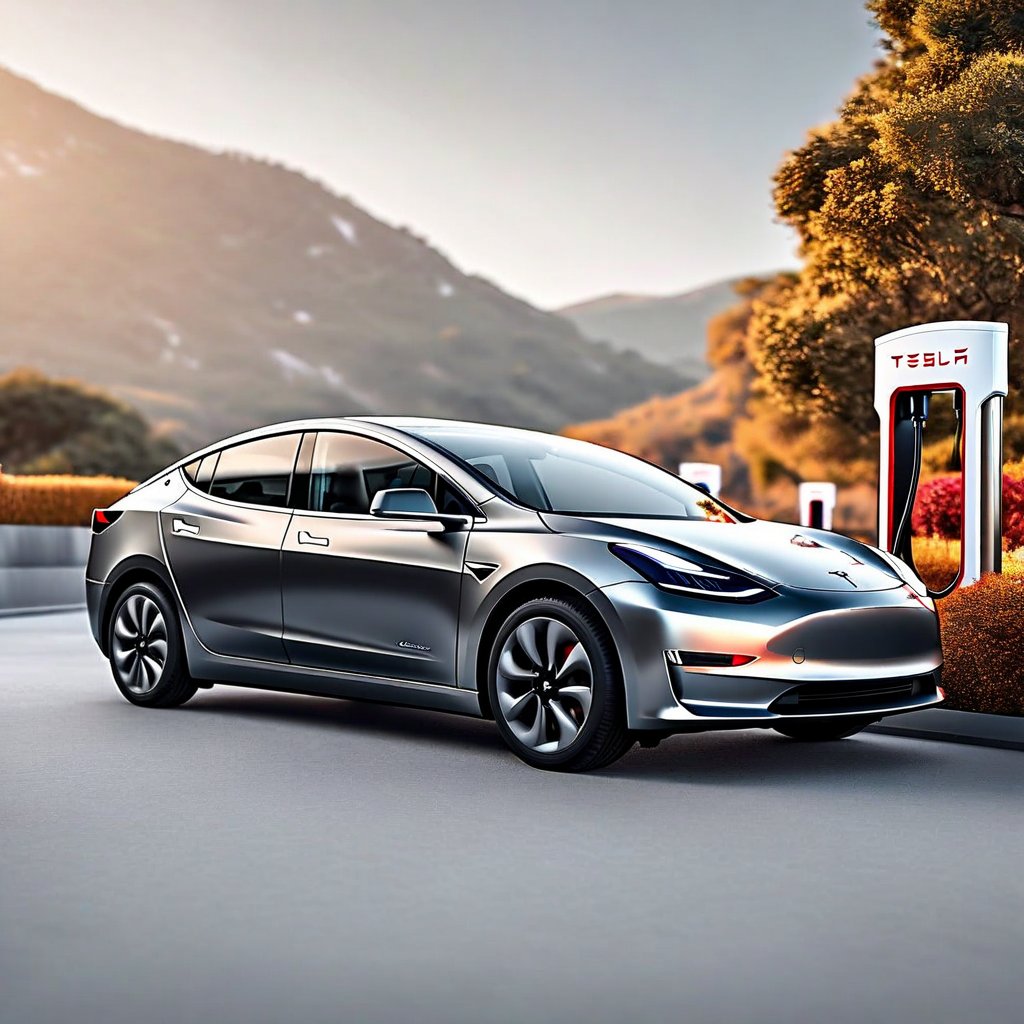
"I'm worried about the battery in a used electric vehicle..." "Is it really okay to buy one now?" "In the end, which is more cost-effective compared to a gasoline car?"
Many people considering purchasing a used EV may have such concerns and questions. As someone working in the used car industry, I receive these kinds of inquiries on a daily basis.
In fact, as of 2026, the used EV market is undergoing a major transformation. The global used car market grew to approximately $1.56 trillion in 2025 and is projected to reach $2.11 trillion by 2030. Among these trends, what's particularly drawing attention are used EVs whose prices have dropped significantly.
The Nissan Leaf, which once cost over 3 million yen, is now available from the 1 million yen range, and the Tesla Model 3 can be purchased from the 2 million yen range. Furthermore, with the entry of Chinese manufacturers such as BYD, the options have expanded dramatically. The era when "electric vehicles were out of reach" is coming to an end.
However, it's risky to jump on a purchase just because the price has dropped. Used EVs have unique checkpoints that differ from gasoline vehicles. Battery condition, in particular, is a crucial factor that significantly affects post-purchase satisfaction.
In this article, we provide a comprehensive guide for those considering purchasing a used EV, covering the current market status, price comparisons of popular models, and the truth about battery degradation based on actual data. By the time you finish reading, you'll be able to find the perfect used EV for your needs and make a confident purchasing decision.
Now, let's first take a look at the current state of the used EV market.
Current State of the Used EV Market | Is 2026 Really the Right Time to Buy?
Trends in Used EV Prices and Reasons for Decline
Used EV prices have changed dramatically over the past three years. The magnitude of this change is unprecedented even when looking at the entire used car market.
In 2023, the used market price for a Nissan Leaf (40kWh, 2019 model) was around 1.8 to 2.2 million yen, but as of 2026, it has dropped to around 1 to 1.5 million yen. In just three years, prices have fallen by 30-40%. Similarly, the Tesla Model 3 Standard Range model has become available for purchase in the early 2 million yen range.
Many people may wonder, "Why have prices dropped so much?" There are primarily three reasons for this price decline.
The first is the increase in supply of new EVs.
With BYD's entry into the Japanese market and the launch of new EVs by domestic manufacturers such as Toyota, Honda, and Mazda, the options for new vehicles have significantly increased. While there were only a handful of options available as of 2023, by 2026 the selection has expanded to over 20 models.
As the options for new vehicles increase, consumers begin to compare and consider "Should I buy new or used?" As a result, the volume flowing into the used market also increases, creating price competition. In particular, the large volume of used EVs entering the market due to lease contract expirations has accelerated the price decline.
The second is the rapid evolution of battery technology.
Like BYD's announced 1000V high-voltage megawatt fast charging technology, the latest EVs achieve remarkable performance with a range of 755km and 97% charge in just 9 minutes. This represents an evolution incomparable to EVs manufactured in 2019-2020.
These technological innovations are lowering the relative value of older generation EVs. As more consumers think "if I'm going to buy one, I want the latest technology," demand for previous model years is decreasing.
The third is the completion of charging infrastructure development.
With e-Mobility Power installing ultra-fast chargers with a maximum output of 350kW at Ebina Service Area on the Tomei Expressway by 2026, the charging infrastructure is steadily improving. The number of fast-charging stations nationwide has increased from approximately 8,000 in 2023 to approximately 15,000 in 2026.
With the expansion of charging infrastructure, consumers who had been hesitant to purchase EVs due to "lack of charging locations" entered the market. While demand increased, supply grew even more, resulting in a downward trend in prices.
3 Reasons Why Now Is the Right Time to Buy
So why can we say that "now is the time to buy"? If prices are falling, wouldn't they get even cheaper if we wait longer? Some people might think this way.
However, I believe 2026 is the best time to purchase a used EV. Let me explain three reasons why.
Reason 1: Reached the bottom price range
Used EV prices have been on a downward trend, but signs of stabilization are emerging as we enter 2026. Demand remains stable particularly for popular models such as the Nissan Leaf and Tesla Model 3, making further significant price drops unlikely.
In fact, looking at the price trends from January to March 2026, the average price of the Nissan Leaf (40kWh, 2019 model) has remained flat. Even if you postpone your purchase thinking "it will get cheaper if I wait a little longer," it's highly likely that you won't gain any significant benefits.
Rather, since vehicles in better condition sell first, the longer you wait, the greater the risk of having fewer options to choose from.
Reason ②: Maturity of Battery Technology
EVs manufactured from 2019 onwards have significantly improved Battery Management Systems (BMS). The degradation during rapid charging that was problematic in early models has been greatly improved in current models.
Specifically, temperature management during charging has been refined, and cell-to-cell balance adjustments are now performed automatically. As a result, the battery capacity retention rate after 5 years has improved from 70-75% in early models to 85-90% in models from 2019 onward.
In other words, the 2019-2021 model year EVs currently available in the used car market are from the "golden years" when battery technology had matured.
Reason 3: Comprehensive Warranty and Support System
More dealerships are now offering free one-year warranties that can be used at approximately 5,000 locations nationwide, similar to Toyota's "Long Run Warranty." An environment where you can purchase used EVs with confidence is being established.
Additionally, Nissan dealerships sometimes offer a "Battery Capacity Warranty" for used Leafs. If the battery capacity drops below a certain level after purchase, you can receive a free replacement or repair.
These warranty systems are also evidence that the used EV market has matured. Until a few years ago, there was an attitude of "buying a used EV is at your own risk," but now an environment has been established where you can purchase with confidence.
Characteristics of People Worth Waiting For
On the other hand, I can't say "you should buy it right now" to everyone. If any of the following apply to you, I recommend waiting a little longer.
For those seeking the latest fast charging technology
Vehicles compatible with 1000V high-voltage charging are still rarely available in the used car market. If you want to experience the latest technology of "97% charge in 9 minutes," you'll need to wait another 2-3 years. Currently, EVs available in the used market typically achieve around 80% charge in 30 minutes with fast charging.
For those who frequently drive long distances of over 500km per week
It is expected to take another 1-2 years before models with a driving range exceeding 700km become available in the used car market. Currently, most used EVs in circulation have a practical driving range of about 200-400km. For those who frequently take long-distance drives, there may still be situations where inconvenience is felt.
Those who cannot install charging equipment at home
For those living in condominiums or rental housing who cannot charge at home, you will need to rely on charging at external locations. While charging infrastructure has been developed, it doesn't yet offer the same level of convenience as gas stations. In environments where home charging is not possible, you may not be able to fully enjoy the benefits of EVs.
[With Price Comparison Table] Thorough Analysis of 3 Popular Used EVs
From here, we will provide a detailed comparison of price, performance, and maintenance costs for three particularly popular models in the used EV market. We will also clarify who each vehicle is suitable for and who it may not be ideal for, so you can use this as a reference to find the right car for you.
Nissan Leaf | The Standard Japanese EV Available from the 1 Million Yen Range
The Nissan Leaf is the most widely available and easily accessible vehicle in the used EV market. With over 15 years of history since the first generation was released in 2010, cumulative domestic sales in Japan have exceeded 500,000 units.
Used Price Guide (as of March 2026):
Recommended Points:
The greatest appeal is the reliability unique to domestic vehicles and the peace of mind of being able to receive maintenance at dealerships nationwide. There are approximately 2,100 Nissan dealerships across the country, so no matter where you live, there's a service center nearby.
Even the 40kWh model can achieve a real-world driving range of approximately 200-250km, providing sufficient performance for commuting and shopping-centered usage. For a 30km one-way commute, charging once or twice a week would be adequate.
Additionally, the Leaf is equipped with a unique feature called "e-Pedal." Since you can accelerate, decelerate, and stop using only the accelerator pedal, fatigue during traffic jams is significantly reduced. Many people say that once they experience it, they can't go back to gasoline vehicles.
Important Notes:
We recommend avoiding early models from before 2017 (24kWh/30kWh), as many units have experienced significant battery degradation. These early models had a simplified battery temperature management system and were particularly susceptible to damage from rapid charging during summer months.
Additionally, for 2019 models with over 100,000 km (62,000 miles) on the odometer, there are cases where battery capacity has declined to the 70% range. Be sure to check the SOH (State of Health) before purchasing.
People suited for Leaf:
- Those who primarily use it for commuting and shopping
- Those who value the reliability of domestic vehicles
- Those purchasing an EV for the first time
- Those looking with a budget of 1 to 1.5 million yen
People for whom LEAF is not suitable:
- Those who want to enjoy long-distance drives on weekends
- Those who seek the latest infotainment system
- Those who prioritize overtaking acceleration on highways
Tesla Model 3 | Premium EV Available for Under $20,000
The Tesla Model 3 is a premium EV that maintains strong popularity even in the used car market. Since its introduction to Japan in 2019, it has gained many fans with its overwhelming driving performance and stylish design.
Used Price Guide:
Recommended Points:
The overwhelming driving performance of 0-60 mph acceleration in 5.6 seconds (Standard Range) is unforgettable once experienced. The acceleration unique to EVs, where maximum torque is generated the moment you press the accelerator, rivals that of luxury sports cars.
Additionally, the ability to add features through OTA (over-the-air) updates is a major attraction. Because new features continue to be added after purchase, it's called a "car that never gets old." In fact, even a Model 3 purchased in 2020 can utilize the latest autonomous driving assistance features when updated to the current software as of 2026.
The fact that the BYD Seal is being noticed as an "affordable Tesla alternative" demonstrates the high popularity of the Model 3. The Tesla brand has a special value that other EVs don't possess.
Important Notes:
Repair costs tend to be high, and parts supply can take time. Tesla has its own repair network, and the reality is that many repairs cannot be handled by general repair shops.
For example, just replacing a front bumper can cost between $1,500 to $2,300. Additionally, if parts are not in stock, it's not uncommon to wait 1-2 months for them to be ordered from overseas.
Before purchasing, check the location of nearby Tesla service centers. If you live outside major metropolitan areas such as Tokyo, Osaka, and Nagoya, you'll need to consider the travel distance for repairs.
Who Model 3 is suitable for:
- Those who prioritize driving performance
- Those interested in the latest technology
- Those who value brand prestige
- Those looking for a budget of 2 to 3.5 million yen
People Model 3 is not suitable for:
- Those who want to keep repair costs down
- Those living in rural areas without a nearby service center
- Those seeking a driving experience similar to traditional vehicles
BYD Atto 3 | A Rising Force Worth Watching for Value-Conscious Buyers
The Atto 3 from BYD, China's largest EV manufacturer, is gaining attention for its comprehensive features and cost performance. Since entering the Japanese market in 2023, it has been steadily increasing its sales numbers.
Used Price Guide:
Recommended Points:
The level of equipment relative to the new car price surpasses that of Japanese and European vehicles. Standard features include an electric panoramic sunroof, a 12.8-inch rotating touchscreen, and an 8-speaker audio system. To equip a Japanese car with equivalent features would require option costs of 500,000 to 1,000,000 yen or more.
BYD is increasing its presence in the global market with cutting-edge battery technology and high-speed infotainment systems, and its reliability in terms of quality is also improving. In particular, the proprietary lithium iron phosphate battery called the "Blade Battery" excels in safety and durability.
Additionally, BYD is rapidly developing its after-sales service network in the Japanese market. As of 2026, there are approximately 100 service locations nationwide, with plans for further expansion.
Important Notes:
The supply in the used car market is still limited, and it may take time to find a vehicle that meets your desired conditions. Since it only entered the Japanese market in 2023, the number of units available on the used market is limited.
Additionally, resale value remains unclear. While the Nissan Leaf and Tesla Model 3 have established market prices in the used car market, BYD still has limited data, making it difficult to predict what price it will sell for several years down the line.
Who the Atto 3 is suitable for:
- Those who prioritize well-equipped features
- Those who prioritize cost performance
- Those who have no resistance to new brands
- Those looking for a budget of 2 to 2.6 million yen
People for whom the Atto 3 is not suitable:
- Those who prioritize resale value
- Those who prefer brands with proven track records
- Those who want a wide selection of used car options
[Comparison Table] Overview of Price, Performance, and Maintenance Costs for 3 Vehicle Models
The Truth About Battery Degradation | Lifespan and Replacement Costs by the Data
Actual Degradation Data of Used EV Batteries
"Aren't used EV batteries degraded?" is the most frequently asked question we receive. It's no exaggeration to say that this concern is the biggest reason people hesitate to purchase a used EV.
To get straight to the point, if it's a 2019 or later model, there's no need for excessive concern.
Generally, EV batteries are designed to maintain 70-80% of their capacity after 8 years or 100,000 miles of driving. This is the figure guaranteed by manufacturers, and in most cases, the actual performance exceeds this benchmark.
Let's look at actual owner data. For the Nissan Leaf (40kWh, 2019 model), reports show that after 5 years and 50,000 km of driving, the average capacity retention rate is **87-92%**. This means that the original range of 250 km when new can still maintain around 220 km after 5 years.
The Tesla Model 3 is even more impressive, with many cases maintaining **90-95%** capacity after 5 years and 50,000 miles of driving. Tesla's battery management system boasts industry-leading performance and is designed to minimize degradation.
However, this is merely a figure based on "average usage." Vehicles that have been used in the following ways may have experienced accelerated deterioration.
- Used fast charging daily
- Always charged to 100%
- Frequently parked for long periods in direct sunlight
- Often drove until battery level dropped below 10%
How to Check Battery Status
There are 5 essential points you must check before purchasing. By checking these, you can identify units with good battery condition.
① Check the SOH (State of Health) value
SOH is an indicator that shows the health status of the battery. With a new vehicle set at 100%, it represents what percentage of the current capacity remains.
- 90% or above: Excellent condition. Performance nearly identical to a new vehicle
- 85-90%: Good condition. No issues for daily use
- 80-85%: Acceptable range. Worth considering depending on price
- Below 80%: Caution advised. Purchase with care
In the case of the Nissan Leaf, you can check the general condition using the "battery capacity gauge" in the meter. If 10 or more segments out of 12 remain, it can be considered in good condition.
For Tesla vehicles, you can check detailed information from the "Battery" menu on the in-car display. Additionally, by using third-party apps, it's possible to obtain even more detailed data.
② Check the frequency of fast charging usage
Vehicles that frequently use fast charging may experience accelerated degradation. While fast charging is convenient, it puts stress on the battery, and daily use can accumulate damage.
Check with the dealer about the "previous owner's charging pattern." Vehicles that primarily used home charging tend to have better battery condition than those that mainly used fast charging.
③ Check charging history (if possible)
In the case of Tesla, charging history is recorded in the vehicle's onboard system. You can check the frequency of fast charging and the battery level at the time of charging.
For the Nissan Leaf, you can request a "battery diagnosis" at a dealership and receive a detailed report. The cost is approximately 3,000 to 5,000 yen, but we highly recommend getting this done before making such a significant purchase.
④Check the remaining warranty period
Choosing a vehicle with remaining manufacturer's warranty provides peace of mind in case of any issues.
- Nissan Leaf: 8 years or 160,000 km (70% capacity warranty)
- Tesla Model 3: 8 years or 192,000 km (70% capacity warranty)
- BYD Atto 3: 8 years or 150,000 km
If the battery capacity falls below the guaranteed value within the warranty period, you can receive a free replacement or repair.
⑤ Actually test drive and check the driving range
Don't rely solely on catalog specifications or dealer explanations—actually test drive the vehicle and check the range display. If the range display at full charge shows 80% or more of the catalog value, it can be considered good.
For example, the Nissan Leaf (40kWh) has a catalog range of 322km. If the display shows 260km or more when fully charged, the battery condition can be considered good.
The Reality of Battery Replacement Costs
The estimated costs if replacement becomes necessary are as follows.
You might think "That's expensive!" but in reality, cases where battery replacement is actually needed are rare. As mentioned earlier, for models from 2019 onwards, they are designed to be used without problems for about 10 years or 150,000 km.
Additionally, battery recycling technology is advancing, and the option of rebuilt products (refurbished batteries) is expanding. In some cases, replacement can be done at about half the cost of new batteries, so please consider multiple options when replacement becomes necessary.
How to Use to Slow Degradation
Here are 5 tips to make your battery last longer after purchase.
① Charge within the 20-80% range
Batteries degrade faster when left at 0% or 100% for extended periods. Ideally, keep the charge between 20-80% for daily use. Only charge to 100% before long-distance trips.
② Limit fast charging to 1-2 times per week
Fast charging is convenient, but it puts stress on the battery. Make normal charging at home your primary method whenever possible, and limit fast charging to emergencies when you're out and about.
③Avoid parking in scorching heat
Batteries are vulnerable to high temperatures, so choose shaded areas or indoor parking during summer. If you must park in direct sunlight, use countermeasures such as a sunshade.
④Charge before battery level drops below 10%
Extremely low battery levels can accelerate degradation. Make it a habit to charge your device when the battery reaches around 20%.
⑤ Receive regular battery diagnostics
We recommend having a battery diagnostic performed at a dealership about once a year. Early detection of abnormalities can prevent major problems.
Fail-Safe Used EV Selection | Essential Pre-Purchase Checklist
Key Points for Choosing a Dealer
When purchasing a used EV, choosing which dealer to buy from is extremely important. By selecting a trustworthy dealer, you can significantly reduce post-purchase troubles.
How to Identify Reliable Retailers:
① Is there staff with specialized EV knowledge?
EVs have a significantly different structure compared to gasoline vehicles. Choose a dealership with staff who have specialized knowledge, including battery condition check methods, charging equipment consultation, and EV-specific maintenance.
If you ask "What is the battery's SOH percentage?" and a staff member can answer immediately, that's reassuring. Conversely, it's safer to avoid dealers where you're met with "What's SOH?" in response.
② Are the warranty contents comprehensive?
Even for used EVs, choose a dealership that provides a warranty for a certain period. In particular, whether there is a warranty regarding the battery is an important point.
Some dealers, like Toyota's "Long Run Warranty," offer a free one-year warranty that can be used at approximately 5,000 stores nationwide. Be sure to confirm the warranty coverage and duration.
③ Is there a proper after-sales service system in place?
It's also important to check whether they have a system in place to handle post-purchase maintenance and repairs. Especially with Tesla, many repairs cannot be handled by regular repair shops, so choosing a dealer that partners with Tesla-certified service centers will give you peace of mind.
EV Specialty Stores vs. General Used Car Dealers:
For those purchasing an EV for the first time, we recommend buying from an EV specialty store even if the price is somewhat higher. You can receive advice from staff with specialized knowledge, and post-purchase support is also comprehensive.
10 Points to Check During a Vehicle Inspection
When you actually go to see the car, be sure to check the following 10 items.
① Battery Status Display Check the battery capacity gauge and SOH display in the meter. 80% or higher is the guideline.
② Charging port condition Check for scratches or dirt in the charging port. Smooth opening and closing of the cover is also important.
③Tire Wear Condition EVs tend to have faster tire wear due to their heavier vehicle weight. Check the remaining tread depth.
④Interior electrical system operation Check that all electrical components such as air conditioning, audio, navigation, and seat heaters are operating normally.
⑤Presence of Charging Cable Check if a standard charging cable is included. If lost, separate purchase is required (approximately 20,000-50,000 yen).
⑥ Exterior scratches and dents Check the exterior condition just like with regular used cars. The lower part of the bumper is particularly prone to scratches.
⑦Balance between mileage and model year Around 10,000 km per year is average. If extremely low (under 3,000 km per year), there's a possibility the vehicle was left unused for extended periods.
⑧Presence of Maintenance Records Confirm whether periodic inspection records remain. Vehicles without records have unclear maintenance history.
⑨Previous Owner's Usage History If possible, confirm the previous owner's usage patterns (mainly commuting, mainly long-distance, etc.).
⑩Driving feel during test drive Actually test drive the vehicle and check for any discomfort in acceleration, deceleration, and handling. It's also important to check for any unusual noises.
Question List to Avoid Post-Purchase Regret
We've compiled a list of 15 questions you must ask the dealer. By confirming all of them before purchase, you can make a choice you won't regret.
Questions about batteries:
- What is the battery SOH (State of Health) percentage?
- Is a battery diagnostic report available?
- Can you provide information about the previous owner's charging pattern (mainly home charging/mainly fast charging)?
- Is there a warranty on the battery?
- If battery replacement becomes necessary, can you accommodate that?
Questions about vehicle condition: 6. Has it been in any accidents or had major repairs? 7. Has it received regular maintenance? Are maintenance records available? 8. How many previous owners has it had? 9. What was it primarily used for? 10. Are there any current issues or concerns?
Questions regarding post-purchase support: 11. Please tell me about the warranty period and warranty coverage 12. Are there any items excluded from warranty coverage? 13. Can you handle post-purchase maintenance? 14. Can I consult about charging equipment installation? 15. How long does it take until vehicle delivery?
Used EV Maintenance Cost Simulation After Purchase
Breakdown of Annual Maintenance Costs
How much does it cost annually to maintain a used EV? Let's look at specific figures using the Nissan Leaf (40kWh) as an example.
① Electricity costs (for monthly driving distance of 1,000 km)
The Nissan Leaf has an energy efficiency of approximately 7 km/kWh. For driving 1,000 km per month, the required electricity would be approximately 143 kWh.
For home charging, electricity costs approximately 25-30 yen per kWh. Monthly electricity costs are about 3,600-4,300 yen, and annual costs are approximately 43,000-52,000 yen.
For a gasoline vehicle (fuel efficiency 15km/L, gasoline price 170 yen/L), driving the same distance would cost approximately 11,300 yen per month and about 136,000 yen per year. With an EV, you could save approximately 80,000 to 90,000 yen annually.
② Automobile Tax
The automobile tax for EVs is a flat rate of 29,500 yen for "private passenger vehicles," rather than being based on engine displacement. Compared to a 2,000cc class gasoline vehicle (39,500 yen), this saves 10,000 yen per year.
Additionally, many local governments offer automobile tax reduction measures for EVs. In the case of Tokyo, automobile tax is reduced by 75% for five years after purchase.
③ Insurance Premiums
Optional insurance premiums vary depending on vehicle price and rating class, but for used EVs, the guideline is approximately 50,000 to 80,000 yen per year. If you don't include vehicle insurance, it can be kept to around 30,000 to 50,000 yen.
④ Vehicle Inspection Costs
EV inspection costs tend to be lower than those for gasoline vehicles. This is because engine oil changes and exhaust system inspections are not required.
For the Nissan Leaf, a dealer inspection costs around 50,000 to 70,000 yen. With a user inspection, it can be done for approximately 30,000 to 40,000 yen.
⑤Maintenance Costs
EVs are characterized by having fewer maintenance items compared to gasoline vehicles.
- Engine oil change: Not required
- Oil filter change: Not required
- Spark plug replacement: Not required
- Muffler replacement: Not required
The necessary maintenance includes tire replacement, brake pad replacement, wiper replacement, and air conditioning filter replacement. An annual maintenance budget of approximately 10,000 to 20,000 yen should be sufficient.
Total Annual Maintenance Costs (Nissan Leaf 40kWh):
Comparison with Gasoline Vehicles
Let's compare it with a gasoline car in the same class (compact car, 2,000cc).
Compared to gasoline vehicles, EVs can be expected to reduce maintenance costs by approximately 150,000 yen annually. This amounts to a difference of about 750,000 yen over 5 years and approximately 1.5 million yen over 10 years.
Even if the purchase price of a used EV is higher than a gasoline car, the difference in maintenance costs makes it possible to fully recover the investment.
Setting Up Your Charging Environment | Charging Strategies at Home and On the Go
Introduction of Home Charging Equipment
To use an EV comfortably, it's important to set up a charging environment at home. If you can charge at home, you can start each morning with a full charge and be freed from the stress of charging when you're out.
Construction Cost Estimate:
In most cases, installing a 200V outlet is sufficient. For the Nissan Leaf, a 200V/15A outlet can fully charge the battery in about 8 hours. By charging overnight, you can start each morning with a full battery.
Subsidy Programs:
Some local governments offer subsidy programs for the installation of EV charging equipment. In Tokyo, you can receive up to 100,000 yen in subsidies. Please check the programs available in your local municipality.
Response Methods for Rental Housing:
If you live in a rental property, installing home charging is often difficult. However, there are cases where the following methods may work.
- Consult with your landlord or property management company to obtain installation permission
- Rent a parking space with EV charging equipment
- Utilize nearby charging stations
Recently, rental properties equipped with EV charging facilities have been increasing. If you are considering moving, why not add this to your property selection criteria?
Utilizing Charging Infrastructure While Out
If you cannot charge at home or when taking long-distance drives, you will need to use charging stations at your destinations.
Comparison of Major Charging Networks:
e-Mobility Power is installed in the most locations, including Nissan and Mitsubishi dealerships, convenience stores, and highway service areas. If you are purchasing a Nissan Leaf or BYD Atto 3, we recommend becoming an e-Mobility Power member.
For those purchasing a Tesla Model 3, the Tesla Supercharger is the most convenient option. It supports high-output charging up to 250kW and can charge to 80% in 15-30 minutes.
Using Charging Apps:
When searching for charging stations, utilize dedicated apps.
- EVsmart: Covers charging spots nationwide. Real-time availability status can be checked
- GoGoEV: Rich user reviews. Understand actual usability
- NAVITIME: Route search and charging spot search can be performed simultaneously
For long-distance drives, we recommend checking the locations of charging spots in advance and planning your charging schedule.
Summary | How to Choose the Best Used EV for You
So far, we have provided detailed explanations about the current state of the used EV market, comparisons of popular models, the truth about battery degradation, key points to check when purchasing, maintenance cost simulations, and the development of charging infrastructure.
Finally, let's summarize how to choose the best used EV for you.
Recommended Vehicle Types by Purpose
For daily commuting and shopping: Nissan Leaf (40kWh)
- Budget: 1 to 1.5 million yen
- Range of 200-250km sufficient for daily use
- Peace of mind with domestic vehicles and dealer support
For those prioritizing driving performance: Tesla Model 3
- Budget: $20,000-$35,000
- Overwhelming acceleration performance and cutting-edge technology
- Constantly evolving through OTA updates
For those prioritizing cost performance: BYD Atto 3
- Budget: 2-2.6 million yen
- Comprehensive standard equipment
- Latest battery technology
Options by Budget
Complete Summary of Purchase Steps
Step 1: Clarify Your Budget and Intended Use First, clearly define your budget ceiling and primary usage purposes. Organize factors such as commuting distance, weekend activities, and whether home charging is possible.
Step 2: Narrow down candidate vehicle models Using the 3 vehicle models introduced in this article as a reference, narrow it down to 2-3 models.
Step 3: Find a Dealership Use used car search sites like Cartree (https://cartree.jp/)などの中古車検索サイトで、条件に合う車両を探します。複数の販売店を比較することをおすすめします。
Step 4: Vehicle Inspection and Test Drive Be sure to inspect the actual vehicle and take a test drive. Don't forget to check the battery condition (SOH).
Step 5: Purchase & Delivery Confirm the warranty details and sign the contract. Make sure to arrange home charging equipment installation before delivery.
Next Actions
The used EV market in 2026 has reached the best timing for purchase, with pricing, quality, and support systems all in place.
If you're thinking "I'll consider a used EV" after reading this article, first try searching for vehicles that meet your criteria on CarTree (https://cartree.jp/). You can search all used EV inventory nationwide at once and easily compare prices.
Once you find a vehicle that interests you, contact the dealership to schedule an appointment to view the actual car. By seeing it, touching it, and test driving it, you should be able to find the perfect car for you.
Why not start living an eco-friendly and budget-conscious lifestyle with a used EV?
Tags
Used EV / Used Electric Vehicles / Best Time to Buy Used Cars / Used Nissan Leaf / Used Tesla / EV Battery Degradation / Used EV Prices / Recommended Electric Vehicles / Used Cars Under $10,000 / EV Purchase Guide / Battery Lifespan / Used Cars 2026 / Used BYD Cars / EV Charging Infrastructure / How to Choose Used Cars
Cartree lets you browse used cars for free and list your own.