
[Taught by Professionals] Top 5 Recommended Used EVs | Charging Infrastructure Compatibility and Points Beginners Should Watch Out For
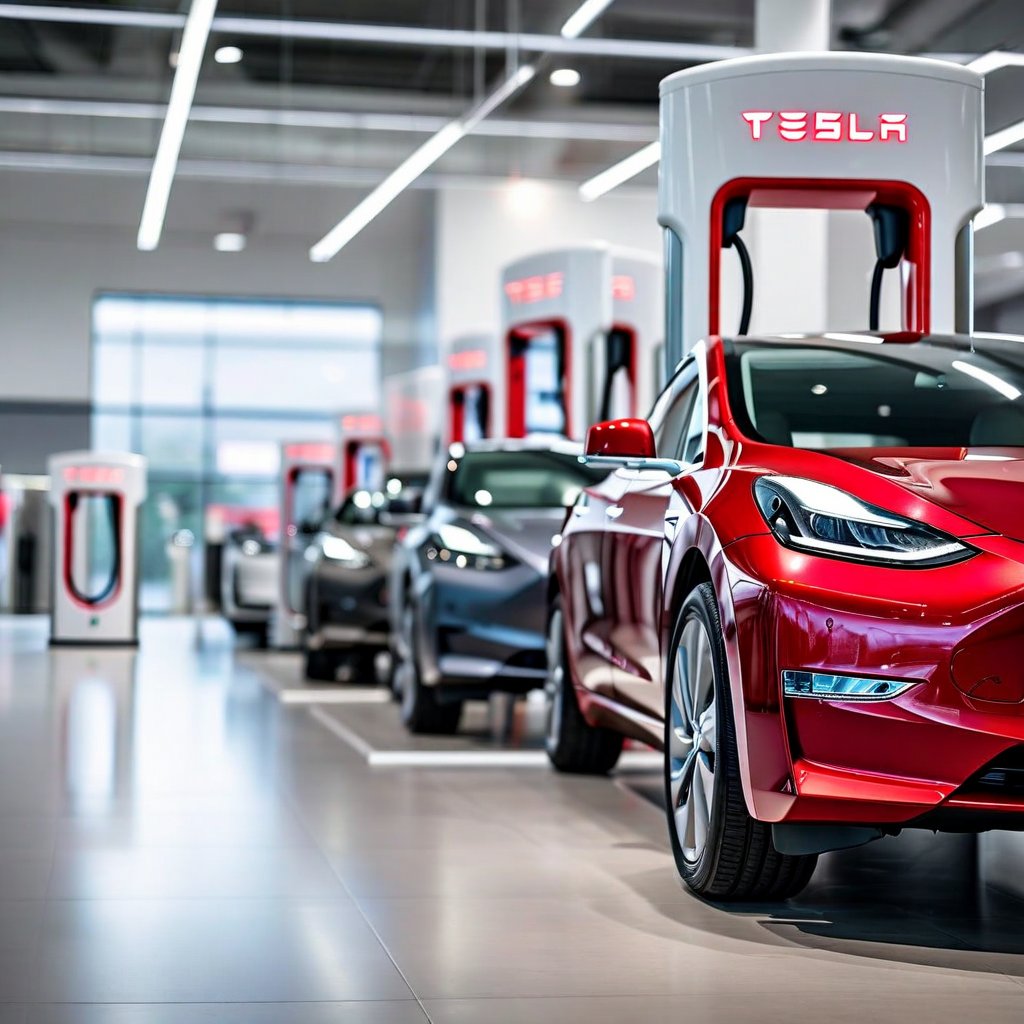
Introduction: Why the Used EV Market is Hot Right Now
"I'm interested in electric vehicles, but new cars are too expensive and out of reach..."
"Aren't the batteries in used EVs already worn out?"
"Are there really enough charging stations to begin with?"
If you have these concerns and anxieties, you're actually not alone—there are many people who feel the same way. Throughout my long career in the automotive industry, I've received countless questions like these. And now, I can say with confidence: 2026 is the perfect time to purchase a used EV.
Why can we say this with such certainty? First, let's look at the market numbers. The global used car market reached approximately $1.47 trillion in 2024 and is projected to expand to $2.11 trillion by 2030. Driving this growth is precisely the used EV market.
Looking at the domestic Japanese market, the situation is similar. EVs sold as new vehicles in the early 2020s are now flooding into the used car market, dramatically expanding the available options. There was once a time when "used EV meant only the Nissan Leaf," but now vehicles from diverse brands such as Tesla, Honda, and Hyundai are available at accessible prices.
However, with more options available, a new concern has emerged: "I don't know which one to choose." There are different checkpoints compared to gasoline vehicles, and purchasing without knowledge could lead to regret.
In this article, we'll thoroughly cover everything you truly need to know when purchasing a used EV to help alleviate such concerns. From methods for checking battery condition to the latest information on charging infrastructure and recommended models by budget, this single article is structured to give you a complete picture of used EV purchasing.
If you read through to the end, you'll surely find the perfect vehicle for you. Now, let's explore the world of used EVs together.
Advantages and Disadvantages of Buying a Used EV [2026 Latest Edition]
When considering purchasing a used EV, the first thing you need to understand is the complete picture of advantages and disadvantages. If you make a purchase decision based solely on the image that "EVs are good for the environment," you may fall into unexpected pitfalls. Here, based on the latest information as of 2026, we will organize the real merits and demerits.
3 Benefits of Choosing a Used EV
1. 30-50% price reduction compared to new vehicles is possible
The biggest appeal of used EVs is undoubtedly their affordability. Even models that cost over 4 million yen new can often be found for around 2 million yen as 3-4 year old used vehicles.
For example, while a new Nissan Leaf starts at around 4 million yen, you can find used 2021 models starting from the 1.5 million yen range. As for the Tesla Model 3, which costs over 5 million yen new, used models are available starting from around 2.5 million yen.
One reason for this price difference is the rapid pace of technological advancement in EVs. Battery technology and autonomous driving features evolve year by year, and models from just a few years ago tend to drop in price as they become "outdated." However, many of these vehicles still have more than enough performance for everyday use, making them a smart choice.
2. Contributes to reducing environmental impact
For those who want to choose an EV for environmental reasons, a used EV may actually be a more eco-friendly choice than a new car. This is because a large amount of CO2 is emitted during the automobile manufacturing process.
When manufacturing a new vehicle, approximately 6 tons of CO2 are emitted for gasoline cars, while EVs emit about 8-12 tons due to battery production. By choosing a used car, you can reduce these manufacturing-related environmental impacts to zero.
Furthermore, EVs do not emit CO2 while driving. Choosing a used EV is an environmentally friendly choice in two ways: "reducing the environmental impact during manufacturing while also achieving zero emissions during operation."
3. Potential Use of Subsidies and Tax Incentives
Many people may think that "used cars are not eligible for subsidies," but that's not necessarily the case. Some local governments also provide subsidies for used EVs.
For example, Tokyo has a subsidy program that provides up to 300,000 yen for the purchase of used EVs (details for fiscal year 2026 should be confirmed). Additionally, since EVs have no engine displacement, they are subject to the lowest automobile tax rate, which helps reduce annual maintenance costs.
Furthermore, subsidies can be utilized when installing charging equipment at your home. By effectively combining national and local government programs, it is possible to significantly reduce initial costs.
4 Disadvantages You Should Know Before Purchasing
You cannot make the right decision by only looking at the advantages. From here, we will honestly share the disadvantages you should be aware of when purchasing a used EV.
1. Battery Degradation Risk
The battery, which is the heart of an EV, degrades over time just like a smartphone. It's not uncommon for a vehicle that could travel 400km when new to only be able to travel 320km after 5 years.
Early Nissan Leafs in particular (models from around 2010-2012) did not have battery temperature management systems and tended to degrade more easily. When selecting a used EV, checking the battery condition is the most critical point (detailed inspection methods will be discussed later).
2. Regional Disparities in Charging Infrastructure
While the number of charging stations is increasing year by year, there is a significant disparity between urban and rural areas. In Tokyo, you can find chargers every few hundred meters, but in mountainous rural areas, there are regions where you need to drive tens of kilometers before finding a charging station.
If you have an environment where you can install charging equipment at home, there's no problem. However, if you live in an apartment and home charging is difficult, it's important to check the availability of nearby charging stations in advance.
3. Uncertainty of Resale Value
EVs have the characteristic that their appraisal value several years down the line is difficult to predict due to rapid technological advancement. Today's cutting-edge technology may become "outdated" in just three years.
However, this also means that it is advantageous for those buying used equipment. As a buyer, you can benefit from the price reductions caused by technological advancement.
4. Short warranty period
When purchasing a new car, long-term warranties such as 5 years or 100,000 km are often included, but in the case of used cars, the warranty has usually expired or has only a short period remaining.
Battery warranty is especially important. Some manufacturers offer long-term warranties of 8 years or 100,000 miles, but be sure to check how much time remains on the warranty when purchasing a used vehicle.
7 Key Checkpoints for Beginners When Purchasing a Used EV
From here, we'll explain specific checkpoints to avoid failure when purchasing a used EV. Since a different perspective is required compared to gasoline vehicles, let's carefully check each point one by one.
Checkpoint 1: How to Check Battery Status
The most important aspect of choosing a used EV is the battery's state of health. If you misjudge this, you may encounter problems after purchase such as "it doesn't drive as far as I expected" or "battery replacement became necessary right away".
As an indicator of battery condition, there is **SOH (State of Health)**. This is a numerical value that shows the degree of battery degradation, with a new battery at 100%, representing what percentage of capacity remains at present.
As a general guideline:
- 90% or above: Very good condition, close to new vehicle
- 80-90%: Good condition, no practical issues
- 70-80%: Slightly degraded, noticeable decrease in driving range
- Below 70%: Caution advised, battery replacement may be needed in near future
When considering a purchase, we recommend using SOH 80% or higher as one benchmark.
The method for checking SOH varies by vehicle model. For the Nissan Leaf, you can get a rough idea of the battery condition from the number of battery capacity segments displayed on the meter panel. If 10 or more segments out of 12 remain, the condition can generally be considered good.
If you want to know more accurate values, request an inspection using diagnostic equipment at a dealership or specialized shop. For a cost of several thousand yen, you can obtain a detailed battery report.
Checkpoint 2: Pre-Verification of Charging Environment
The comfort of EV life is greatly influenced by the charging environment. Be sure to check the following three points before making a purchase.
Availability of Home Charging Equipment Installation
For detached houses, installing a 200V outlet is relatively easy. The construction cost typically ranges from 50,000 to 150,000 yen, and it enables a full charge overnight.
On the other hand, in the case of condominiums, coordination with the management association is necessary. Recently, the number of condominiums that "allow the installation of EV charging equipment" has been increasing, but the reality is that hurdles are still quite high. Before purchasing, check the management rules and consult with the management association if necessary.
Survey of charging spots at workplace and nearby areas
Even if home charging is difficult, daily use is possible if there are charging spots at your workplace or nearby. Using apps like "EVsmart" or "GoGoEV," you can easily search for charging spots nationwide.
It's reassuring to check in advance how many charging spots are available along your commute route and within your usual activity areas.
Types of Charging Cards and Fee Structures
To use public charging spots, you need a charging card. Major services include "e-Mobility Power," "ENEOS Charge Plus," and "Nissan ZESP."
The balance between monthly basic fees and usage-based charges varies by company, so it's important to choose a plan that matches your usage frequency. If you use it only a few times a month, usage-based pricing tends to be more cost-effective, while monthly flat-rate pricing is generally better if you use it daily.
Checkpoint 3: Vehicle History and Maintenance Records
It's a basic principle of used car selection, but checking the vehicle history is essential even for EVs.
Checking Accident History and Repair Records
Vehicles with accident history may have frame distortion or battery damage remaining, even if they appear fine visually. Especially in the case of EVs, batteries are often mounted in the lower part of the vehicle body, so checking whether there is any history of damage to the undercarriage is an important checkpoint.
The Importance of Regular Inspection Records
Choose a vehicle that has maintenance records (maintenance notes) remaining. Vehicles that have been regularly inspected at dealerships tend to have batteries that are maintained in good condition.
Previous Owner's Usage History
If possible, you'll want to confirm how the previous owner used the vehicle. The degree of battery degradation differs between a vehicle used for daily commuting and one used only on weekends.
Vehicles that frequently used fast charging tend to experience more battery degradation. Conversely, vehicles that mainly used regular charging at home were likely treated in a way that was gentler on the battery.
Checkpoint 4: Warranty and After-Sales Service
When purchasing a used EV, checking the warranty coverage is particularly important.
Remaining period of manufacturer's warranty
Many EV manufacturers provide long-term warranties for their batteries. For example, the Nissan Leaf offers an 8-year/100,000-mile battery capacity warranty. When purchasing a used vehicle, make sure to verify how much of this warranty remains.
If within the warranty period, you can receive free repair or replacement if the battery capacity falls below a certain level (in most cases, below 70%).
Details of Dealer-Specific Warranty
Even if the manufacturer's warranty has expired, there are cases where the retailer provides their own warranty. Be sure to carefully check the warranty period, covered parts, disclaimer clauses, and other details.
In particular, whether the battery is included in the warranty coverage is an important point. There are many warranties where "the drivetrain is covered but the battery is not."
Estimated Battery Replacement Costs
Be sure to keep in mind the costs if battery replacement becomes necessary. While it varies by vehicle model, the estimated cost is approximately 600,000 to 800,000 yen for the Nissan Leaf, and approximately 1 to 1.5 million yen for the Tesla Model 3.
However, due to advances in battery technology, replacement costs are trending downward year by year. Additionally, there are cases where costs can be reduced by using rebuilt batteries (reconditioned batteries).
Checkpoint 5: Points to Confirm During a Test Drive
Seeing is believing. Take a test drive and check the following points.
Acceleration Performance and Regenerative Braking
One of the appeals of EVs is the smooth and powerful acceleration that only electric motors can provide. Experience the instant response when you press the accelerator and the passing acceleration on highways.
Also, check how the regenerative braking feels when you release the accelerator. Regenerative braking is a system that uses the motor as a generator during deceleration, converting kinetic energy into electricity and returning it to the battery. If this function becomes weak, there may be problems with the battery or motor.
Actual Range Measurements
There is a difference between the catalog values and actual driving range. During a test drive, compare the cruising range displayed on the meter with the actual distance traveled.
In particular, the driving range with air conditioning is important. During summer and winter, using the air conditioner can reduce the driving range by 20-30%.
Presence of abnormal noise or abnormalities
EVs have the advantage of being easier to detect unusual noises due to the absence of engine sounds. Listen carefully while driving for any abnormal sounds such as "rattling" or "squeaking".
Additionally, check the steering feel, brake responsiveness, and suspension condition in the same way as you would for a gasoline vehicle.
Checkpoint 6: Calculating Total Cost of Ownership
The appeal of EVs lies not only in their purchase price but also in their low running costs. Calculate the Total Cost of Ownership (TCO) to determine whether they are truly cost-effective.
Electricity Cost vs Gasoline Cost
The electricity efficiency of EVs is generally 6-8 km/kWh. Assuming an electricity cost of 30 yen per kWh, the electricity cost required to drive 100 km is approximately 400-500 yen.
On the other hand, driving 100km in a gasoline car with 15km/L fuel efficiency costs about 1,000 yen in gasoline (calculated at 150 yen/L). In other words, EVs can run at about half the fuel cost of gasoline cars.
With home charging, you can further reduce costs by utilizing nighttime electricity rates. Nighttime electricity plans can be as low as 15-20 yen per kWh, achieving an remarkably low cost of 200-300 yen per 100km of driving.
Automobile Tax and Weight Tax
Since EVs have no engine displacement, the lowest automobile tax rate (approximately 25,000 yen per year) is applied. Additionally, they qualify for eco-car tax reductions, and vehicle weight taxes are also reduced.
Maintenance Costs
EVs do not require engine oil changes, and brake pad wear is reduced due to the effects of regenerative braking. Regular maintenance costs can often be kept to less than half that of gasoline vehicles.
However, tire wear tends to be faster than gasoline vehicles. EVs have heavier vehicle weight due to battery weight, and also have greater instantaneous torque, which increases the burden on tires.
Checkpoint 7: Determining the Right Time to Buy
In the used car market, there are times when prices tend to drop. To make a smart purchase, be mindful of timing as well.
Fiscal Period and Model Change Timing
March and September are the fiscal year-end periods for many dealerships, and discounts can be expected as they aim to meet their sales targets. Additionally, when new models are announced, the prices of used cars from previous model years tend to decrease.
Timing of Subsidy Applications
Municipal subsidies often end once the budget runs out. While budgets are plentiful at the beginning of the fiscal year (April), there are cases where applications cannot be submitted near the end of the fiscal year (February-March) due to budget exhaustion. If you want to take advantage of subsidies, it's recommended to act early.
[2026 Edition] Charging Infrastructure Compatibility Status and Utilization Guide
The notion that "there aren't enough charging stations" is becoming a thing of the past. Here's an overview of the charging infrastructure landscape as of 2026 and smart ways to utilize it.
Latest National Charging Station Map
Charging infrastructure within Japan is steadily expanding year by year. As of 2026, the number of charging spots nationwide exceeds approximately 30,000 locations, with rapid charger installations progressing primarily at service areas (SA) and parking areas (PA) along highways.
Particularly noteworthy is the increase in high-power chargers. In addition to conventional 50kW fast chargers, installations of 90kW, 150kW, and even 350kW ultra-fast chargers are progressing. e-Mobility Power announced that by 2026, they will install charging facilities with 8 ports, including ultra-fast chargers with a maximum output of 350kW, at the Ebina Service Area on the Tomei Expressway.
This significantly improves upon the conventional challenge of 'taking more than 30 minutes to charge.' With a 350kW charger, compatible vehicles can charge to 80% in just 10-15 minutes.
Charging Station Installation Status by Prefecture
The number of charging stations installed varies by region. Major metropolitan areas such as Tokyo, Kanagawa Prefecture, Aichi Prefecture, and Osaka Prefecture have well-established infrastructure, but some rural areas have fewer stations.
However, even in rural areas, charging stations are often installed along major national highways, at shopping malls, and at roadside stations (michi-no-eki). If you check your route in advance, long-distance drives should not be a problem.
Comprehensive Comparison of Charging Cards and Apps
To use public charging spots, you need a charging card or app. Let's compare the major services.
e-Mobility Power (eMP)
This is the service that can be used at the most charging spots. With a combination of monthly basic fees and pay-per-use charges, you can choose a plan according to your usage frequency.
- Fast Charging Plan: $4,180/month, fast charging $16.5/minute
- Standard Charging Plan: $1,540/month, standard charging $2.75/minute
Nissan ZESP3
This is a service for Nissan vehicle owners, but it can also be used with EVs from other manufacturers. There is also a plan that provides unlimited access to chargers at Nissan dealerships, making it especially recommended for Nissan Leaf owners.
- Simple Plan: Monthly fee $5.50, fast charging $0.39/minute
- Premium 10: Monthly fee $44, 10 minutes of fast charging free + $0.39/minute for excess
Tesla Supercharger
This is a charging network exclusively for Tesla vehicles. With a maximum output of 250kW, it can charge up to 80% in 15-30 minutes. Pricing is pay-per-use, at approximately 40-50 yen per kWh.
Since 2024, some Superchargers have begun opening up to EVs from other manufacturers, and they are expected to become even more accessible in the future.
Home Charging Equipment Installation Guide
Approximately 80% of EV owners report that "home charging is their primary method." If you can install charging equipment at home, the comfort of EV life will dramatically improve.
Installation Cost Range
The installation cost for home charging equipment varies depending on the type of work required, but general estimates are as follows.
- 200V outlet installation only: $500-$1,000
- Dedicated charging outlet (with cable): $1,000-$1,500
- Wall-mounted charger (6kW): $1,500-$2,500
- V2H compatible charger: $8,000-$15,000
Construction Process and Timeline
- Site survey (free to several thousand yen)
- Quotation and contract
- Application to power company (1-2 weeks)
- Construction work (half day to 1 day)
- Start of use
Plan for approximately 2 to 4 weeks in total.
How to Utilize Subsidies
In some cases, subsidies from the national or local government can be utilized for the installation of home charging equipment. For example, the Ministry of Economy, Trade and Industry's "Clean Energy Vehicle Introduction Promotion Subsidy" provides partial subsidies for the installation costs of charging equipment.
Additionally, Tokyo has its own subsidy system, with cases where up to half of the installation costs (with a cap) may be subsidized. Please check the system available in your local municipality.
Professionally Selected! Top 5 Recommended Used EVs [By Budget & Purpose]
Now for the main topic—here are 5 recommended used EVs. Find the perfect vehicle for you based on your budget and needs.
[Under 1 Million Yen] Nissan Leaf (1st Generation & Early 2nd Generation)
Used Market Price: 600,000–950,000 yen
The Nissan Leaf is the perfect entry-level option for those new to used EVs. Since its debut in 2010 as the world's first mass-produced EV, cumulative sales have exceeded 500,000 units, making it the most widely available model in the used car market.
Basic Specifications
- Battery capacity: 24kWh (1st generation) / 40kWh (2nd generation)
- Driving range: Approximately 200km (1st generation) / Approximately 320km (2nd generation)
- Charging time: Approximately 30 minutes with quick charging (up to 80%)
Recommended Points
First, the overwhelming distribution volume is attractive. With many options available, it's easy to find specimens in good condition, and price negotiations tend to be favorable.
Additionally, a stable parts supply is a major advantage. Maintenance is easily accessible not only at Nissan dealerships but also at general repair shops, helping to keep maintenance costs down.
Furthermore, it has excellent compatibility with charging infrastructure. Most rapid chargers in Japan use the CHAdeMO standard, and the Leaf supports this. You'll rarely have trouble finding a charging station anywhere in the country.
Points to Note
The first-generation Leaf (2010-2017) was not equipped with a battery temperature management system (TMS). As a result, the battery tends to degrade more quickly due to use in high-temperature environments and frequent use of rapid charging.
When purchasing, always check the number of battery segments and choose a unit with 10 or more segments remaining.
Suitable candidates
- Those who mainly use their vehicle for daily commuting and shopping
- Those purchasing an EV for the first time
- Those who want to keep maintenance costs low
[Around 1.5 Million Yen] Nissan Leaf e+ (62kWh Model)
Used Market Price: 1.3-1.8 million yen
In response to feedback that "the Leaf has a short driving range," the e+ model was introduced, equipped with a large-capacity 62kWh battery.
Basic Specifications
- Battery Capacity: 62kWh
- Range: Approximately 450km (WLTC Mode)
- Charging Time: Approximately 60 minutes with fast charging (up to 80%)
- Maximum Output: 160kW (218PS)
Recommended Points
The biggest appeal is its practical driving range. The catalog value of 450km can be expected to achieve approximately 350-400km in actual driving conditions, making it suitable for weekend drives and trips back home.
Additionally, the motor output has been improved, allowing you to enjoy powerful acceleration. Overtaking on highways is effortless, and you can drive without stress.
The battery is equipped with a temperature management system, making it less prone to degradation—a reassuring feature. It's also recommended for those who want to ride for many years to come.
Points to Note
Due to the large battery capacity, charging time is longer. Even with fast charging, it takes about 60 minutes to reach 80%, so you need to plan your charging stops when taking long-distance drives.
Additionally, with a vehicle weight of approximately 1.7 tons, the electric efficiency (electric fuel economy) tends to be somewhat poor. Keep in mind that it won't achieve the range advertised in the catalog specifications.
Who It's For
- Those who want to enjoy weekend drives
- Those who don't want to worry about driving range
- Those who want to keep their vehicle for a long time
[Around 2 Million Yen] Tesla Model 3 (Standard Range Plus)
Used Market Price: 1.8–2.5 million yen
Many people may have the image that "Tesla is synonymous with EVs." The Model 3 is Tesla's most compact and affordable sedan.
Basic Specifications
- Battery capacity: Approximately 55kWh (estimated)
- Range: Approximately 430km (EPA standard)
- Charging time: Approximately 25 minutes to 80% with Supercharger
- 0-60mph acceleration: 5.6 seconds
Recommended Points
Tesla's greatest appeal is its advanced technology. All operations are completed through a large 15-inch touchscreen with smartphone-like usability. Through OTA (Over The Air) updates, new features continue to be added even after purchase.
Additionally, the existence of the Supercharger network is a major advantage. Tesla's proprietary high-output charging network is deployed nationwide, making long-distance driving worry-free.
The driving performance is also excellent, offering acceleration that rivals sports cars. The 0-100km/h acceleration of 5.6 seconds is an experience you won't find in gasoline vehicles in the same price range.
Important Points
Tesla has its own unique design philosophy, resulting in higher repair costs. Even for body panel replacement and paint repairs, costs tend to be higher than for typical vehicles.
Additionally, due to the limited number of service centers, repairs can sometimes take a long time. If you live in a rural area, it's especially important to check the location of the nearest service center in advance.
Suitable For
- Those who love the latest technology
- Those who want to enjoy sporty driving
- Those who find the Tesla brand appealing
[Compact] Honda e
Used market price: 1.5 to 2 million yen
Honda's first mass-production EV that appeared in 2020 is the Honda e. With its compact body and distinctive design, it's a vehicle specifically designed for urban use.
Basic Specifications
- Battery capacity: 35.5kWh
- Driving range: Approximately 280km (WLTC mode)
- Charging time: Approximately 30 minutes with quick charge (up to 80%)
- Minimum turning radius: 4.3m
Key Highlights
The appeal of the Honda e is, above all, its excellent maneuverability in urban areas. With a total length of 3.9m and a minimum turning radius of 4.3m, its compact size makes it easy to handle even in narrow alleys and parking lots, making it ideal for daily use.
The high level of design is another noteworthy point. The retro-modern exterior and the futuristic interior with five screens side by side bring a sense of joy in ownership.
Additionally, it features rear-wheel drive, delivering a surprisingly fun driving experience that doesn't feel like an EV. The stability in curves and excellent throttle response are irresistible for driving enthusiasts.
Important Notes
With a range of approximately 280km, it is not suitable for long distances. For long trips using highways, you need to carefully plan your charging schedule.
Additionally, the Honda e was discontinued in 2024, so attention must be paid to future parts supply and support systems. Before purchasing, make sure to confirm the support status at the dealership.
Suitable for
- Those living in urban areas
- Those considering it as a second car
- Those who prioritize design
[SUV] Hyundai IONIQ 5
Used Market Price: 3,000,000 - 4,000,000 yen
The IONIQ 5, a next-generation EV released by South Korea's Hyundai Motor Company. It was the flagship model when they re-entered the Japanese market in 2022 and has received high acclaim worldwide.
Basic Specifications
- Battery capacity: 72.6kWh
- Range: approximately 618km (WLTC mode)
- Charging time: approximately 18 minutes with 350kW charger (10→80%)
- Length: 4,635mm / Width: 1,890mm
Recommended Points
The IONIQ 5's greatest feature is its ultra-fast charging enabled by an 800V high-voltage system. Using a 350kW charger, it can charge from 10% to 80% in just 18 minutes. This technology overcomes the EV weakness of 'long charging times.'
Additionally, the spacious interior is attractive. Taking advantage of the flat floor unique to EVs, despite its 4.6m overall length, it achieves an E-segment level interior space. The rear seat legroom is remarkably spacious, offering sufficient practicality as a family car.
The driving range is also impressively long at **618km (WLTC mode)**, providing peace of mind for long-distance drives. In real-world driving, you can expect around 500km.
Points to Note
The downside is that there is limited availability in the Japanese market. Since the number of units circulating in the used market is limited, it may take time to find a vehicle that meets your desired specifications.
Additionally, Hyundai's service network is still developing. With a limited number of dealerships, you may experience inconvenience when it comes to maintenance and repairs.
Suitable Candidates
- Families
- Those who drive long distances frequently
- Those interested in the latest technology
Subsidies and Tax Incentives for Used EV Purchases [Latest 2026]
Even with used EVs, you may be eligible for subsidies and tax benefits if certain conditions are met. Use these wisely to reduce your purchase costs.
National Subsidy Programs
CEV Subsidy (Clean Energy Vehicle Introduction Promotion Subsidy)
This is a subsidy program implemented by the Ministry of Economy, Trade and Industry. While new vehicles are the primary target, used EVs that meet certain conditions may also be eligible.
For detailed information about fiscal year 2026, please check the latest updates on the Ministry of Economy, Trade and Industry and the Next Generation Vehicle Promotion Center websites.
Municipal Subsidies
In addition to national subsidies, many local governments also offer their own independent subsidy programs.
Tokyo has a program that provides subsidies of up to 300,000 yen for the purchase of used EVs (details for fiscal year 2026 require confirmation).
Kanagawa Prefecture In addition to the prefecture's own subsidies, municipalities such as Yokohama City and Kawasaki City also have their own subsidy programs.
In Aichi Prefecture and primarily in Nagoya City, there are subsidy programs to support EV purchases.
Subsidies often end once the budget is exhausted, so if you decide to make a purchase, proceed with the application process as soon as possible.
Tax Incentives
Reduction of Automobile Tax
Since EVs have no engine displacement, the lowest automobile tax rate (approximately 25,000 yen per year) applies. Compared to a gasoline vehicle with 2,000cc displacement (39,500 yen per year), this results in annual savings of about 15,000 yen.
Reduction of Automobile Weight Tax
EVs that qualify for eco-car tax reductions receive reduced automobile weight tax. They are tax-exempt for a certain period from new vehicle registration, and reduced tax rates continue to apply thereafter.
Tax Incentives for Installing Charging Equipment
When businesses install charging equipment, they may be eligible for tax incentives. Individuals may also qualify for mortgage interest deduction benefits, so please consult with a tax accountant or tax office for details.
Used EV Purchase Process [Step-by-Step Guide]
For those purchasing a used EV for the first time, we will explain the purchasing process step by step.
Step 1: Information Gathering and Budget Setting (1-2 weeks)
First, clarify your needs and budget.
- What are the main uses? (Commuting, shopping, weekend drives, etc.)
- What driving range do you need?
- Is home charging possible?
- What is your budget limit?
Use the vehicle information introduced in this article as a reference to narrow down your candidates.
Step 2: Selecting a Dealer and Vehicle Inspection (1-2 weeks)
Once you've decided on a candidate, look for a dealership.
- Certified pre-owned from authorized dealers
- Major used car dealerships
- EV specialty stores
- Private sales (used car listing sites like CarTree)
Each option has its advantages and disadvantages, but for beginners, authorized dealers and major retailers with comprehensive warranties are recommended.
Step 3: Test Drive & Negotiation (1 Week)
Once you find a vehicle you're interested in, be sure to take it for a test drive. Use the checkpoints mentioned above to verify the battery condition and driving performance.
In business negotiations, we will confirm and negotiate the following points.
- Breakdown of vehicle price and additional costs
- Warranty details and coverage period
- Delivery schedule timeline
- Trade-in vehicle appraisal amount if applicable
Step 4: Contract & Vehicle Delivery Preparation (2-4 weeks)
Once the contract is finalized, prepare the necessary documents.
- Seal registration certificate
- Resident certificate
- Parking certificate
- Registered seal
Additionally, if you are planning installation work for home charging equipment, proceed with arrangements at this timing.
Step 5: Post-Delivery Procedures (1 Week)
Once the vehicle is delivered, perform the following procedures.
- Enrollment in or switching of voluntary insurance
- Application for charging card
- Application for subsidies (if applicable)
- Confirmation of how to use charging equipment
Frequently Asked Questions (FAQ)
We answer frequently asked questions from those considering purchasing a used EV.
Q1: How many years will a used EV battery last?
Generally, EV batteries are said to be practically usable for about 8-10 years or 150,000-200,000 km. However, this varies greatly depending on usage conditions and charging habits.
Using the vehicle in high-temperature environments or frequently utilizing rapid charging are factors that accelerate battery degradation. Conversely, with proper temperature management and primarily using regular charging, the battery can last longer.
Q2: How long does it take to charge?
It depends on the charging method.
- Normal charging (home/200V): 6-12 hours from empty to full charge
- Quick charging (50kW): approximately 30-60 minutes to 80%
- Ultra-fast charging (150kW+): approximately 15-30 minutes to 80%
In daily use, regular charging at home is the main method, with fast charging typically used during long-distance drives.
Q3: How much does the driving range decrease in winter?
When temperatures are low, battery performance decreases, and heating use consumes power, resulting in a range reduction of approximately 20-40%.
For example, if a vehicle has a catalog range of 400km, you should expect approximately 240-320km during winter months. By utilizing seat heaters and steering wheel heaters while moderating air conditioning use, you can minimize this reduction.
Q4: How much does battery replacement cost?
It varies by vehicle type, but here are the general guidelines:
- Nissan Leaf (40kWh): $60,000-$80,000
- Nissan Leaf e+ (62kWh): $80,000-$100,000
- Tesla Model 3: $100,000-$150,000
However, due to advancements in battery technology, replacement costs have been trending downward year by year. Additionally, by using rebuilt batteries (refurbished batteries), there are cases where costs can be reduced.
Q5: Are insurance premiums for used EVs expensive?
Just because it's an EV doesn't mean insurance premiums are particularly higher. Like gasoline vehicles, they are determined by factors such as vehicle price, age, and rating class.
However, some vehicle models such as Tesla have high repair costs, so vehicle insurance premiums may be set somewhat higher. We recommend obtaining quotes from multiple insurance companies and comparing them carefully.
Q6: Can I charge even if I live in an apartment?
The following methods can be considered for charging in a condominium.
- Installing charging equipment in common areas: Requires approval from the management association
- Installation in designated parking spaces: Often difficult with mechanical parking systems
- Using nearby charging stations: Can operate without home charging
Recently, there has been an increase in condominiums that "allow the installation of EV charging equipment." Before purchasing, check the management rules and consult with the management association if necessary.
Q7: How do I plan charging for long-distance trips?
When driving long distances, plan your charging using the following steps.
- Check the distance to your destination
- Understand your vehicle's actual driving range (approximately 70-80% of catalog specifications)
- Search for charging stations along your route
- Set charging points with a comfortable margin
By using apps like "EVsmart" or "GoGoEV," you can easily search for charging spots along your route. Additionally, if you have a Tesla vehicle, simply entering your destination into the navigation system will automatically suggest an optimal charging plan for you.
Q8: What about the appraisal when selling a used EV?
The used EV appraisal is greatly influenced by the battery condition. Vehicles with high SOH tend to have higher appraisal values.
To prepare for the sale, keep the following points in mind.
- Keep regular maintenance records
- Avoid frequent use of rapid charging
- Avoid long-term parking in high-temperature environments
Summary: Find the Right Used EV for You
So far, we have comprehensively covered the information necessary for purchasing a used EV. Finally, let's organize the important points.
5 Golden Rules for Buying a Used EV
- Always check the battery SOH - aim for 80% or higher
- Aim for 80% or higher
- Obtain diagnostic data if possible
- Research charging infrastructure in your area in advance
- Confirm home charging availability
- Check nearby charging stations
- Choose a vehicle model that fits your budget and needs
- Nissan LEAF for daily use
- e+ or IONIQ 5 for long-distance driving
- Tesla if technology is a priority
- Verify warranty coverage
- Remaining manufacturer warranty period
- Availability of dealer's own warranty
- Make decisions based on total cost of ownership
- Consider maintenance costs, not just purchase price
- Take advantage of subsidies and tax incentives
2026 is a Great Opportunity to Buy a Used EV
2026 will be a turning point for the used EV market.
- Charging infrastructure expansion is progressing, improving convenience
- Increased influx of vehicles into the used market, expanding options
- Battery technology maturation makes used vehicle purchases more reliable
If you're thinking "I'm interested in EVs, but maybe it's still too early..." now is exactly the right time to start.
Next Steps
If this article has increased your interest in used EVs, please consider taking the next action.
- Search for used EVs on Carszoo and narrow down by budget and model to get a sense of market prices
- Narrow down by budget and model to get a sense of market prices
- Visit a nearby dealership to see the actual vehicle and check size and texture that photos can't convey
- Check size and texture that photos can't convey
- Test drive to experience the EV's performance - the quiet and smooth acceleration is unforgettable once you experience it
- The quiet and smooth acceleration is unforgettable once you experience it
The quietness unique to EVs, smooth acceleration, and contribution to the environment. Used EVs make all of these achievable at an affordable price.
I hope you find the perfect one for you.
This article is based on information as of January 2026. Subsidy programs and price ranges are subject to change, so please check the official websites for the latest information.
If you are looking for a used car, please find your favorite vehicle from our extensive inventory at CarTree (https://cartree.jp/).
Tags
Used EV / Used Electric Vehicle / Recommended Used Cars / EV Purchase Guide / Battery Degradation / Charging Infrastructure / Used Nissan Leaf / Used Car Purchase Precautions / EV Beginner / Used Tesla Model 3 / Used Cars Under $10,000 / Used EV Subsidies / SOH Verification Method / Home Charging Equipment / 2026 EV Market
Cartree lets you browse used cars for free and list your own.